Interactions Correctly?


How to Build and Implement Customer Retention Models


Key Strategies to Improve Customer Retention
Keeping your customers is far more cost-effective than acquiring new ones. Yet, businesses often focus more on attracting new customers than nurturing the relationships they already have.
This is where a well-crafted customer retention model comes in. It shifts the focus from one-time transactions to long-term relationships.
But building an effective retention model isn’t just about offering discounts or sending thank-you emails.
It’s about understanding your customers deeply. It’s about recognizing what drives their loyalty, what makes them churn, and how you can proactively address their needs before they even think about leaving.
At Xerago, we’ve seen businesses transform with the right retention strategies. From predictive analytics that flag at-risk customers to personalized engagement plans that keep them coming back, the possibilities are endless when you put the customer at the center of your model.
In this article, we’ll walk you through the key steps to build and implement a customer retention model that works. We’ll explore the data you need, the tools to leverage, and the strategies to create personalized, meaningful experiences that encourage loyalty.
What is a Customer Retention Model?
A customer retention model is a structured approach businesses use to keep their customers coming back. It’s a proactive strategy that focuses on nurturing existing relationships rather than constantly seeking new ones.
Unlike acquisition strategies, retention models are about depth rather than breadth. Instead of asking, “How many new customers can we get?” it shifts the focus to “How can we make sure our current customers stay happy and committed?”
Importance of customer retention matters because keeping a customer is often more cost-effective and yields higher returns than the unpredictable and expensive process of attracting new ones.
Benefits of Retention Models over Acquisition Strategies
- Lower Costs, Higher Returns: Retaining customers doesn’t just save money - it maximizes the resources you’ve already invested. Studies consistently show that retaining an existing customer costs significantly less than attracting a new one.
- Creating Meaningful Relationships: Long-term customers are more than transactions - they are partnerships. Over time, they become more familiar with your brand, your values, and your products, creating trust and mutual respect.
- Building Brand Loyalty: Loyal customers don’t just buy - they advocate. They recommend your services to others, leave positive reviews, and become informal ambassadors for your brand. This loyalty creates a ripple effect that is hard to replicate through traditional marketing efforts.
Core Principles of Customer Retention Models
Successful customer retention doesn’t happen by chance - it’s built on clear, actionable principles that guide every interaction. These principles provide a roadmap for creating meaningful connections with your customers and ensuring they remain loyal over time.
1. Reach, Retain, and Reward: The Three Pillars of Retention
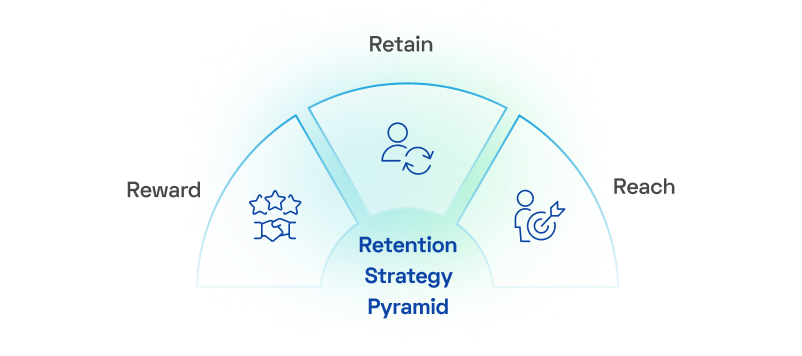
a) Reach: Consistently Engage Your Customers
Retention begins with consistent and meaningful communication. Regular engagement keeps your brand at the forefront of customers’ minds, reminding them of the value you bring. However, it’s not just about frequency - it’s about relevance. Whether through email, social media, or in-app notifications, the content should align with your customers’ interests and needs.
For example, a retailer might send personalized style tips or updates on new arrivals based on a customer’s past purchases. Such timely and thoughtful outreach ensures that you remain a trusted part of their routine.
b) Retain: Provide Exceptional Experiences
Delivering consistent quality and value is essential to keep customers coming back. Retention isn’t just about avoiding mistakes - it’s about going above and beyond.
- Product excellence: Make sure your products or services consistently meet or exceed customer expectations.
- Service quality: Respond to customer inquiries and complaints promptly, and with empathy.
- Added value: Surprise customers with extras that enhance their experience, like early access to new products or educational resources.
When customers feel they’re getting unique value from your brand, they’re more likely to stay loyal.
c) Reward: Recognize Loyalty and Effort
Recognition is a powerful motivator. Rewarding customers for their loyalty doesn’t always mean discounts - it can also mean exclusive access, priority service, or even a personal thank-you note.
- Loyalty programs: These are highly effective for creating repeat engagement. Points systems, free perks, or tier-based rewards keep customers invested in your brand.
- Exclusive offers: Make customers feel special by giving them early access to sales or invitations to VIP events.
Even simple gestures like a birthday greeting or a thank-you email after a significant purchase show customers that their support is noticed and appreciated.
2. Personalized Experiences: The Key to Connection
The End of Generic Interactions
Today’s customers have high expectations for personalization. They no longer tolerate one-size-fits-all messages or irrelevant offers. Instead, they expect brands to understand their preferences, anticipate their needs, and deliver experiences that feel tailor-made.
- Why Personalization Matters: Personalized experiences make customers feel valued as individuals rather than numbers in a database. This emotional connection fosters loyalty and encourages repeat business.
- How to Achieve It: Use data responsibly to craft messages and offers that resonate. For instance, a customer who frequently buys skincare products might appreciate recommendations for complementary items or a reminder when their favourite product is back in stock.
Personalization in Practice
- Targeted Messaging: Send emails or push notifications that reflect a customer’s preferences or recent activity. For example, a fitness app might highlight workout routines based on the user’s goals.
- Customized Offers: Provide discounts or rewards based on customer behaviour. For instance, if a customer hasn’t made a purchase in a while, offer a personalized incentive to re-engage them.
- Tailored Content: Create blog posts, videos, or guides that address specific customer interests. If your data shows that a segment of your audience is focused on sustainability, highlight your eco-friendly practices or products.
Going Beyond the Transaction
Personalization should extend beyond the buying process. Make every interaction meaningful, whether it’s a follow-up after a purchase, a proactive response to feedback, or a check-in message that doesn’t sell anything but shows genuine care. This kind of thoughtful engagement builds trust and fosters long-term loyalty.
By consistently applying these principles, businesses can create retention strategies that not only retain customers but also transform them into enthusiastic advocates for the brand. When customers feel valued and understood, they’re far more likely to stay loyal - and even go out of their way to recommend your business to others.
Types of Customer Retention Models
Customer retention isn’t just about minimizing churn; it’s about creating lasting value for your customers and your business.
Each retention model focuses on different strategies, allowing you to tailor your approach to your audience and goals. Here’s a closer look at the most effective retention models, with actionable insights for each.
1. RFM Model (Recency, Frequency, Monetary)
The RFM model evaluates customers based on three key factors. It helps prioritize resources by focusing on customers who are most likely to contribute to your revenue.
- Recency: How recently did they interact with your business?
- Frequency: How often do they engage or purchase?
- Monetary Value: How much revenue do they generate?
How to Apply It:
Segment customers into high, medium, and low-value categories. For example, customers who recently purchased, buy often, and spend more should be nurtured with loyalty rewards. On the other hand, customers who haven’t engaged in a while may need reactivation campaigns, like personalized discounts or exclusive offers.
2. Customer Lifecycle Stage Model
Customers go through different phases in their relationship with your business. When it comes to customer retention model the focus in on post-purchase stages that include:
- Onboarding: Helping Customers Get Started.
- Activation: Demonstrating Initial Value
- Adoption: Encouraging Regular Use
- Usage: Driving Consistent Engagement
- Engagement: Building Emotional Connections
- Cross-Sell/Up-Sell: Expanding product holding ratio
- Retention: Preventing Churn
- Renewal: Securing Long-Term Commitments
- Re-engagement: Reigniting Interest
- Re-activation: Bringing Back Lost Customers
- Advocacy: Turning Customers into Brand
How to Apply It:
To apply the post-purchase customer lifecycle stage model effectively, businesses need to focus on strategies tailored to each stage, ensuring a seamless progression from onboarding to advocacy.
Start by setting customers up for success during the onboarding phase with personalized welcome emails, tutorials, and proactive support. Move into activation and adoption by delivering quick wins and encouraging habitual use of your product through guided experiences or gamified milestones.
Monitor customer interactions during the usage and engagement stages, using data-driven insights to sustain activity and build emotional connections with personalized offers and communication. For retention and renewal, anticipate potential churn by addressing pain points early and providing clear value through usage summaries, incentives, or loyalty rewards. If engagement wanes, re-engage lapsed customers with targeted campaigns, exclusive offers, or updates on new features.
Finally, cultivate advocacy by rewarding loyal customers with referral programs, public recognition, and opportunities to share their positive experiences. This systematic approach ensures a customer’s journey remains rewarding, fostering long-term loyalty and driving growth.
3. Cohort Analysis Model
Cohort analysis allows you to pinpoint and address specific challenges within customer segments.
This model tracks groups of customers (cohorts) who share common characteristics, like:
- Signup Date: Customers who joined in the same month or year.
- Behavior: Customers who purchased the same product or used a particular feature.
How to Apply It:
Analyze cohort behavior over time to identify patterns. For instance, if a cohort’s engagement drops after three months, focus on retention efforts like loyalty campaigns or value-added features at that point.
4. Churn Prediction and Prevention Model
This model uses data to identify customers at risk of leaving. Common indicators include:
- Decreased purchase frequency.
- Reduced engagement with emails or app features.
- Negative feedback or unresolved issues.
How to Apply It:
- Use predictive analytics tools to flag at-risk customers.
- Send personalized outreach, like check-in emails, discounts, or tailored recommendations.
- Address their concerns proactively through surveys or direct communication.
Each retention model offers unique benefits, and the best approach often involves combining elements from multiple models.
Steps to Build a Customer Retention Model
Customer retention strategy involves a step by step process:
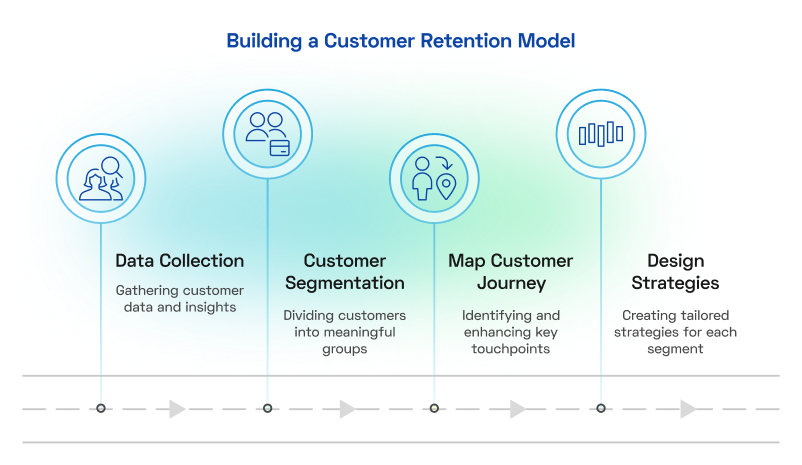
Start with Data Collection and Customer Segmentation
Retention begins with understanding your customers deeply, and data is the key to that understanding. Start by collecting information about their behaviours, preferences, and purchase history. Tools like customer management platforms and analytics dashboards help track interactions and identify patterns.
Once you have the data, segmentation is the next step. Divide your customers into meaningful groups based on factors such as:
- Demographics: Age, location, income level.
- Behaviour: Frequency of purchases, spending habits, engagement levels.
- Needs: Pain points, product preferences, or specific use cases.
Segmentation allows you to target each group with tailored strategies. A blanket approach rarely works, but speaking directly to each segment’s needs makes a lasting impact.
Map the Customer Journey
Think of the customer journey as a roadmap showing every interaction a customer has with your brand. Understanding this journey helps you spot opportunities to improve satisfaction and reduce friction.
- Identify Key Touchpoints: Pinpoint where customers engage with your business - website visits, on-boarding, post-purchase interactions, or customer support calls.
- Enhance Critical Moments: Some stages of the journey hold more weight than others. For instance, the on-boarding experience can set the tone for the entire relationship. Make these moments memorable by offering clarity, responsiveness, and value.
- Address Pain Points: If certain stages are prone to complaints or drop-offs, dig into the reasons why. Whether it’s slow response times or unclear processes, fixing these issues can significantly boost retention.
Design Strategies for Each Segment
Retention strategies should vary based on the type of customer you’re targeting. A one-size-fits-all approach often leaves some groups feeling neglected.
- High-Value Customers: These are your most profitable customers. Focus on exclusivity - special perks, early access to products, or dedicated account managers show you value their loyalty.
- At-Risk Customers: Look for signs of disengagement, such as a drop in purchases or reduced interaction. Counteract this with personalized incentives like discounts, reminders, or a heartfelt email checking in.
- New Customers: Build loyalty from the start by ensuring smooth on-boarding, clear communication, and proactive support.
Tools and Technologies for Effective Retention Implementation
Implementing an effective customer retention strategy requires more than just a solid plan—it demands the right tools and technologies to bring that plan to life. From managing customer data to automating engagement and predicting future behaviour, let’s explore the key tools and features that can transform your retention efforts.
Choosing the Right CRM Tools
Customer relationship management tools play a central role in implementing a retention model. These platforms help you manage customer data, track interactions, and automate personalized engagement. When selecting a CRM, focus on features that directly impact retention:
- Automation Capabilities: Automate tasks like sending follow-ups, reminders, or personalized offers to save time and maintain consistency.
- Segmentation Features: The ability to group customers based on behaviours, preferences, or demographics is essential for targeted campaigns.
- Analytics and Reporting: Insightful dashboards allow you to measure metrics like churn rate, customer lifetime value, and more in real time.
Some popular CRM options to consider include:
- HubSpot: Known for its user-friendly tools and integrated automation features, making it ideal for businesses of all sizes.
- Salesforce: A robust choice for enterprises, offering deep customization and advanced analytics capabilities.
Selecting the right tool depends on your business’s size, needs, and budget. Remember, the best CRM is the one your team will use effectively.
Using Predictive Analytics to Stay Ahead
Data doesn’t just tell you what happened - it can also predict what’s likely to happen next. Predictive model for customer retention uses patterns in customer behaviour to forecast future actions, such as which customers might churn. This allows businesses to take preventive measures and apply efforts in knowing how to predict customer churn before it’s too late.
How Predictive Analytics Enhances Retention:
Predictive analytics enables businesses to anticipate customer needs, ensuring timely and relevant interventions that keep customers engaged. It also uncovers hidden patterns in behaviour, allowing you to refine retention strategies with precision.
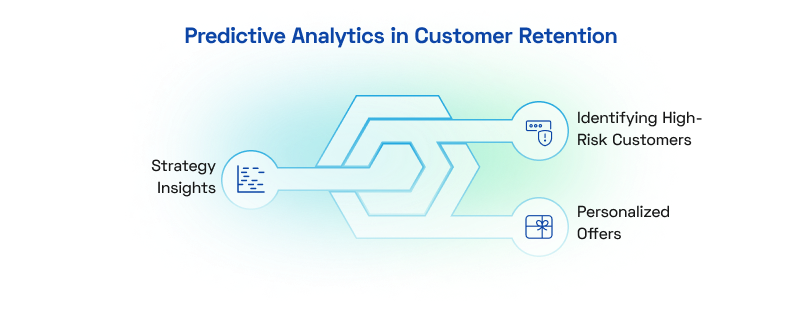
For example, an online retailer could use predictive tools to identify customers who haven’t made a purchase in several months. Offering them a tailored discount or showcasing new products aligned with their past preferences might encourage them to return.
Streamlining Engagement with Automation
Automation ensures your customer engagement efforts run smoothly without constant manual intervention. Here’s how automation can elevate your retention strategies:
- Chatbots for Instant Support: Chatbots provide 24/7 assistance, resolving common issues quickly and efficiently. This keeps customers happy while reducing the workload on your support team.
- Email Marketing Campaigns: Automated emails keep your brand on the customer’s radar. Examples include:
- Welcome emails for new customers.
- Reminders for abandoned carts.
- Exclusive offers for loyal customers.
- Personalized Outreach: Automation tools can use customer data to craft messages that feel personal. For instance, a birthday greeting with a special discount is a small gesture that goes a long way in building goodwill.
Measuring and Improving Retention Models
Customer retention isn’t a set-it-and-forget-it process. Finding answer for significant questions like how to improve customer retention rate requires on-going monitoring and analysis to understand what’s working and what isn’t.
Regular Performance Reviews
Regular performance reviews help identify strengths to amplify and weaknesses to address.
- Real-Time Dashboards: Use dashboards to track critical metrics like retention rate, churn rate, and repeat purchase behaviour. Real-time insights allow you to make data-driven adjustments without delay.
- Campaign Evaluation: Evaluate the success of retention campaigns. For example, if a loyalty program didn’t generate repeat purchases as expected, analyze why. Did the rewards fail to resonate? Was communication clear?
By keeping a pulse on your efforts, you can fine-tune strategies and maximize their effectiveness.
Listening to Customers through Feedback
Customer feedback is one of the most valuable tools in your retention toolkit. It tells you what customers appreciate and, more importantly, where you’re falling short.
- Gather Feedback EffectivelyUse multiple channels to collect feedback, such as surveys, social media, online reviews, or direct conversations. Keep it simple - customers are more likely to respond to short, focused surveys.
- Act on What You LearnIt’s not enough to listen; you need to act. If customers complain about slow delivery, work on speeding it up. If they love a particular feature, highlight it more in your marketing efforts.
- Communicate Your ChangesLet customers know when their feedback has led to improvements. For example: “You spoke, we listened - our new delivery options are now faster and more flexible!” This transparency builds trust and shows customers their opinions matter.
Continuously Refine Your Approach
Customer needs and preferences evolve, and your retention model should, too. Adopting a mindset of continuous improvement ensures you stay ahead of changing trends and expectations.
- Experiment with New Strategies: Test different approaches, like adjusting loyalty rewards or trying a new engagement channel. A/B testing can help determine what resonates most.
- Monitor Competitors: Keep an eye on what others in your industry are doing. Learning from their successes - and missteps - can inspire fresh ideas for your own strategy.
- Stay Proactive: Don’t wait for retention problems to arise. Use data and feedback to anticipate customer needs and involve yourself in understanding customer retention analysis model and make strategic adjustments before issues surface.
Iteration isn’t about admitting failure; it’s about striving for excellence. Every adjustment brings you closer to the goal of long-term customer loyalty.
Customer Retention Models Examples
Real-world examples often illustrate the value of retention strategies better than theory.
Here are three industries where businesses have mastered customer retention:
- E-commerce: Amazon’s Prime MembershipAmazon’s Prime program has become synonymous with customer loyalty. By bundling tangible benefits like free shipping, exclusive discounts, and streaming services, Amazon ensures customers have multiple reasons to remain engaged. The key takeaway? Offering value beyond the transaction builds strong connections.
- Retail: Starbucks RewardsStarbucks excels in keeping customers coming back with its app-based rewards program. Customers earn points for purchases, which can be redeemed for free items. The app also integrates convenience features like mobile ordering, further enhancing the experience.
Common Customer Retention Roadblocks to Avoid
While many businesses aim for retention, there are common missteps that can undermine even the best strategies:
- Over-Reliance on Discounts: Discounts are an easy way to grab attention, but they can erode your brand’s perceived value if used excessively. Customers may come to expect discounts and resist paying full price.
- Ignoring Churn Signals: Churn doesn’t happen overnight—it’s often preceded by warning signs like reduced engagement or declining purchase frequency. Failing to act on these signals means missing opportunities to re-engage customers before they leave.
- Inconsistent Communication: Sporadic or irrelevant communication can frustrate customers. A lack of timely follow-ups or poorly targeted messages may make customers feel undervalued or misunderstood.
Practical Tips for Long-Term Success
- Build Trust Through Transparency: Customers appreciate honesty, whether it’s about pricing, policies, or addressing mistakes. Transparent communication fosters trust, making customers more likely to stay loyal over time.
- Use Data Responsibly: While customer data is crucial for personalization, misuse or overreach can alienate customers. Always prioritize privacy and ethical practices when collecting and using data.
- Focus on Relationships, Not Transactions: Customers aren’t just buyers; they’re individuals with preferences, values, and emotions. Taking the time to engage meaningfully - through personalized messages, thoughtful gestures, or proactive support - turns casual buyers into long-term advocates.
Conclusion
Customer retention models are about more than keeping customers - it’s about building relationships that stand the test of time. By focusing on metrics, leveraging technology, and continuously improving, businesses can create strategies that drive loyalty and sustainable growth.
Now is the time to evaluate your approach. Start small if needed, but make retention a priority in your overall strategy. Loyal customers don’t just bring consistent revenue; they help your brand thrive in an ever-competitive market.
Vignesh Gunaseelan
Technical Content Writer
Xtelligence Inbox.
Your weekly dose of marketing smarts!
Related Posts


Digital Analytics
Real-Time Personalization Is Losing You Conversions. Here Is How to Take Them Back.


















Digital Analytics
Customer Segmentation: Using Predictive & Adaptive Models for Targeted Marketing