Interactions Correctly?


Don’t Let Features Mislead You - How Drupal and AEM Solve Different Problems


Drupal vs AEM: A CMS Comparison for Enterprises
The Real Drupal Vs. AEM Debate Is about Business Fit Not Features
Most enterprises approach CMS selection by comparing features side by side.
At first glance, this makes sense. More features should mean a better platform, right?
Not necessarily.
Due to this lack of clarity roughly 35-40% of CMS projects fail in their objectives.
The real challenge isn’t about picking the CMS with the longest feature list. It’s about finding the one that fits your business’s strategy, operational workflows, and future growth.
Software Won’t Fix Everything

Technology Should Serve Business Goals
A CMS isn’t just software - it’s the backbone of your digital strategy.
That’s how a CMS becomes an investment in the future, not just a quick fix for today.
Get it right, and it streamlines operations, supports growth, and adapts to your needs.
Get it wrong, and you’re stuck with inefficiencies, rising costs, and missed opportunities.
Instead of asking, “Which CMS has the most features?” businesses should ask:
- “What challenges are we facing in content management and digital experience?”
- “Which CMS aligns best with our operational model and long-term growth strategy?”
- “Do we need deep customization (Drupal) or an enterprise-ready marketing suite (AEM)?”
Focusing on Problems Leads to Smarter Decisions
Every business has unique needs, and the right CMS should help address them.
Consider these common challenges:
- \\Scalability and Growth -\\A fast-growing company may need a CMS that can handle increasing traffic and content complexity.
- \\Marketing and Personalization –\\Organizations focused on customer engagement may benefit from AEM’s advanced targeting and analytics.
- \\Cost and Resource Management –\\Businesses with development expertise may prefer Drupal’s open-source flexibility to avoid vendor lock-in.
So, it’s evident that a feature-by-feature comparison might seem like the safest way to choose a CMS. But it’s also the easiest way to lose sight of what really matters.
Take Drupal and Adobe Experience Manager (AEM). Both are enterprise-level CMS platforms. Both are powerful.
But they serve different purposes.
The Drupal Tale
Drupal isn’t just open-source. It’s built for customization.
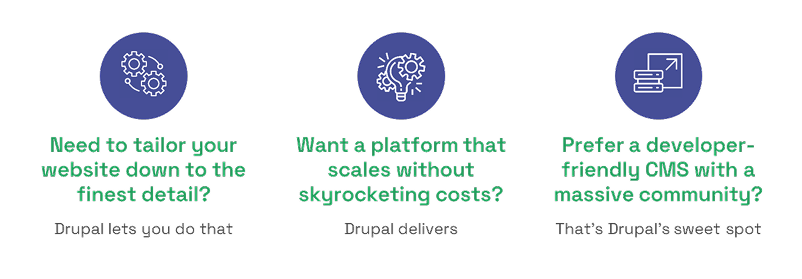
That’s why government agencies, universities, and media companies love it.
But there’s a trade-off: More flexibility means more responsibility.
If you don’t have an in-house development team - or the budget to hire one - Drupal’s learning curve can be steep.
Why Enterprises Opt for AEM
Adobe Experience Manager (AEM) is about seamless integration.
If your company runs on Adobe’s marketing suite (Adobe Analytics, Target, Marketo), AEM just makes sense.
Here’s why:
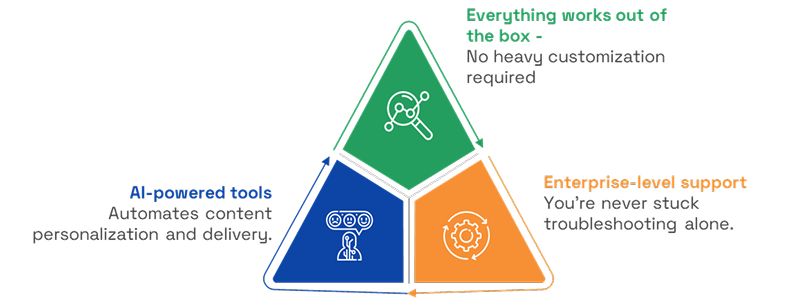
- It’s free from too much customization
- Offers comprehensive support
- Creates personalized content
But that convenience comes at a cost. AEM is a premium product with premium pricing.
A CMS isn’t just a checklist of capabilities. It’s the foundation of your digital ecosystem.
If it doesn’t align with your business goals, no amount of features will make it the right choice. Drupal and AEM both check the same boxes — content authoring, workflow management, personalization, scalability.
At first glance, they might seem interchangeable. But that’s the problem with feature lists.
They don’t tell you how each CMS works in practice or who it’s actually built for. And that’s where the real differences start to emerge.
The Right Mould Matters
Organizations must go beyond the feature list and consider the bigger picture:
- How does the CMS fit into their existing tech stack?
- Does it align with their internal expertise and resources?
- Will it support long-term growth and evolving business needs?
A platform that looks great on paper can still create bottlenecks, slow down workflows, or fail to scale with your needs.
That’s why the smartest organizations don’t just compare features — they evaluate how a CMS impacts efficiency, growth, and long-term strategy.
The right choice isn’t the one with the most capabilities.
It’s the one that moves your business forward.
Drupal vs. AEM Isn’t a Fair Fight - They Serve Different Goals.
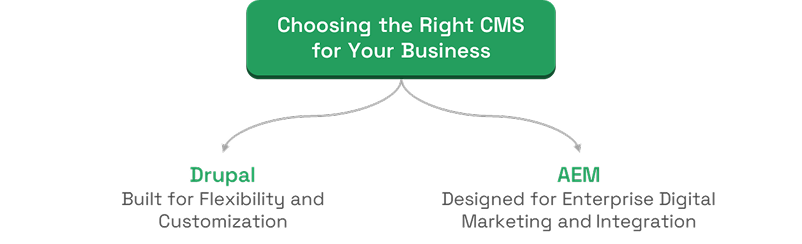
Drupal and AEM are both powerful, but they’re built for completely different needs.
AEM Shines When Brand Control and Scale Matter Most
Why Global Brands and Large Enterprises Prefer AEM’s Ecosystem
For global brands, consistency is essential.
Managing multiple regions, languages, and digital channels is complex. AEM simplifies the challenge. Designed for enterprises, it creates a unified ecosystem for seamless content governance.
Large enterprises choose AEM because it provides:
- Centralized Content Management
- Advanced Workflow and Approval Processes
- Scalability for Global Operations
AEM gives enterprises complete control.
Web, mobile, email — every digital touchpoint stays seamless and consistent. In industries like finance, retail, and healthcare, that’s not a luxury — it’s a necessity.
Brand trust and compliance aren’t optional. AEM ensures they never fall through the cracks.
The Role of Adobe’s Suite in Creating Tightly Controlled, Omnichannel Experiences
AEM goes beyond content management — it connects everything.
With seamless integration into Adobe’s marketing suite, you can deliver data-driven experiences across every channel while staying in control.
Branding stays consistent. Messaging stays aligned. Everything works together effortlessly.
Key Adobe tools that enhance AEM’s omnichannel capabilities include:
- Adobe Analytics
- Adobe Target
- Adobe Commerce
- Adobe Creative Cloud
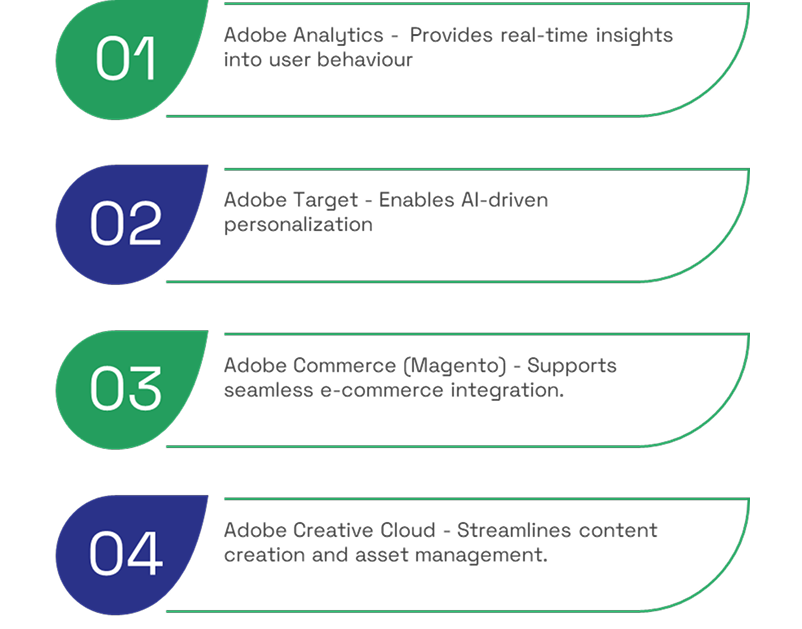
For large organizations, that means brand consistency stays intact while real-time data fine-tunes customer engagement.
How AEM's Aligns with Organizations Seeking End-to-End Digital Marketing Integration
AEM is designed for enterprises that need a fully integrated digital marketing ecosystem.
Its licensing and architecture reflect this. Unlike open-source platforms like Drupal, AEM runs on a subscription-based enterprise model, giving you access to Adobe’s ecosystem, premium support, and cloud-hosted infrastructure.
AEM is built for complexity. Whether you’re a global retailer, financial institution, or media giant, a disconnected tech stack isn’t an option.
With AEM, everything stays connected, agile, and data-driven — so your brand stays in control, and customer experiences never fall out of sync.
Drupal Wins on Flexibility, Agility, and Open-Source Innovation
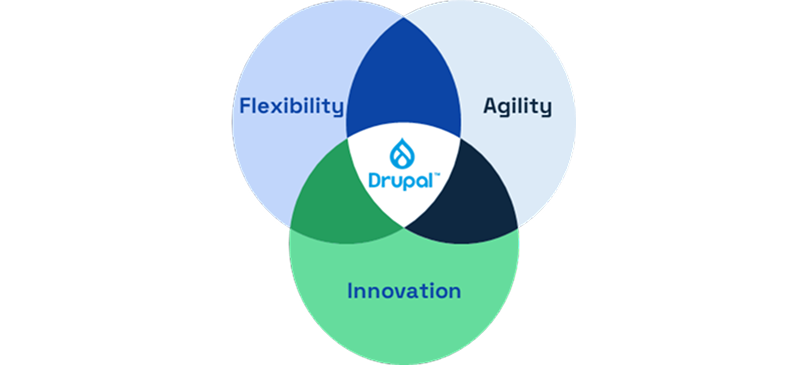
Why Drupal’s Open-Source DNA Makes It Powerful for Businesses That Need Adaptability
Drupal is all about freedom.
No licensing fees. No vendor lock-in. No limits on customization.
Its open-source foundation gives businesses total control over how they build, extend, and scale their digital experiences.
For organizations that need flexibility without restrictions, Drupal is a powerful choice.
Key advantages of Drupal’s open-source DNA:
- Full Control Over Customization
- Active Global Community
Drupal adapts to your needs.
It’s more than a CMS — it’s an evolving ecosystem built for flexibility and long-term success.
How Drupal’s Modular Framework Enables Custom Workflows and Integrations
Drupal doesn’t force you into a predefined system.
Its modular architecture works like building blocks — letting you create workflows and integrations your way.
Need a custom setup? No problem.
Unlike monolithic CMS platforms, Drupal adapts to you, not the other way around
Top 3 Benefits of Drupal’s Modular Architecture
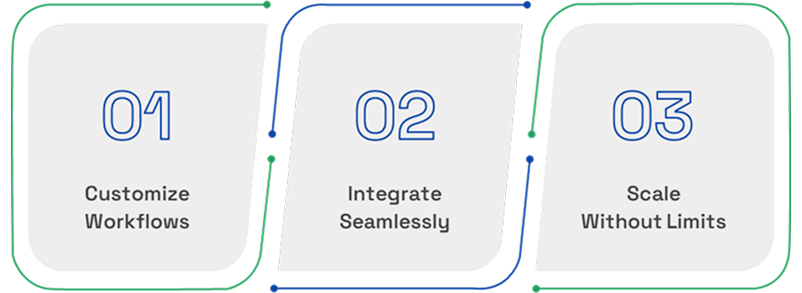
- Customize Workflows to Fit Your Needs – You can design content approval processes, set user roles, and automate publishing schedules to match your business operations. With Drupal, you stay in control of how content moves through your organization.
- Seamlessly Integrate with Your Tech Stack – Whether you use a CRM, marketing automation tools, or e-commerce platforms, Drupal’s API-first approach ensures everything works together. Your data flows smoothly, keeping your systems connected and efficient.
- Scale Without Limits – As your business grows, Drupal grows with you. You can add new features, expand integrations, and adapt workflows — all without disrupting your existing setup.
Security and Compliance in a Modular Architecture
When managing enterprise content, security and compliance aren’t optional — they’re essential.
Drupal’s modular architecture is designed to keep your data protected while ensuring your organization meets industry regulations.
Here’s how:
1.Role-Based Access Control (RBAC) for Data Protection
With Drupal, you control who can access, edit, and publish content. Role-based permissions ensure that only authorized users handle sensitive information, reducing security risks and unauthorized changes. Whether it’s internal teams, external partners, or content contributors, you can define user roles to align with your security policies.
2. Meeting Industry Compliance Standards (GDPR, HIPAA, etc.)
Drupal provides built-in tools and contributed modules to help you stay compliant with regulations like:
- GDPR (General Data Protection Regulation): Manage user consent, anonymize data, and handle deletion requests efficiently.
- HIPAA (Health Insurance Portability and Accountability Act): Secure patient data with encryption, access controls, and audit logs.
- Other industry-specific compliance needs: Drupal’s flexibility allows organizations to implement security protocols that match their regulatory requirements.
3. A Secure and Scalable Infrastructure
Drupal is built with security in mind:
- Frequent security updates: The Drupal Security Team actively monitors and patches vulnerabilities.
- Enterprise-grade encryption: Protects sensitive data at rest and in transit.
- Modular security enhancements: Add firewalls, multi-factor authentication, and intrusion detection as needed.
With Drupal, you’re not just getting a CMS — you’re getting a secure, scalable platform that evolves with your business while keeping data protected and compliant.
Making the Right Choice
Need full control, flexibility, and cost-effective scaling? Drupal wins.
Prefer turnkey marketing, vendor support, and seamless integration? AEM is the better fit.
At its core, the decision comes down to one question:
Do you want developer-driven innovation or enterprise-controlled convenience?
Drupal and AEM are both powerful platforms, but they solve different challenges. Drupal is the go-to choice for businesses that need full control, customization, and flexibility.
Its open-source nature makes it ideal for organizations that want to tailor workflows, integrate with various systems, and scale cost-effectively without vendor lock-in. It’s particularly favored by government agencies, media companies, and universities that need adaptable solutions.
On the other hand, AEM is designed for enterprises that require a tightly integrated marketing and content management ecosystem. It’s the preferred choice for large organizations that need centralized content governance, advanced personalization, and seamless compatibility with Adobe’s marketing suite.
With robust enterprise support and compliance features, AEM ensures that global brands maintain consistency across multiple channels while delivering data-driven customer experiences.
Your CMS Choice Isn’t About Software
Too many organizations jump into software comparisons before defining their goals.
But without a clear strategy, even the most powerful platform won’t deliver results.
Key Business Questions to Ask Before Choosing a CMS
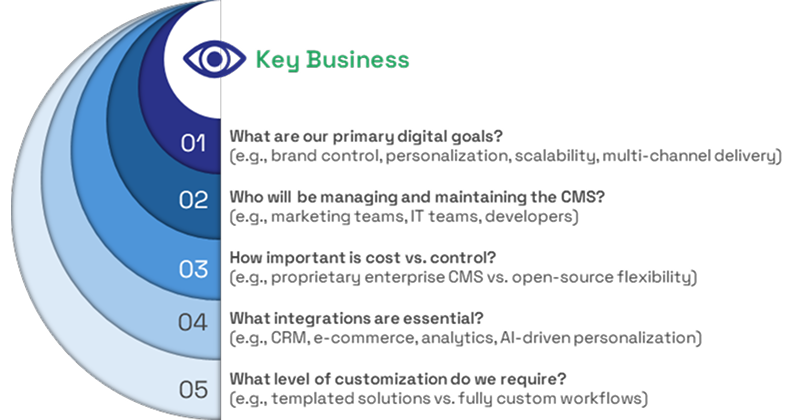
Start with objectives, not features.
When businesses focus on strategy first, the right CMS becomes clear.
Need flexibility? Drupal delivers.
Want enterprise integration? AEM is built for that.
Exploring a composable approach? It’s more possible than ever.
The best choice isn’t about software — it’s about what drives your business forward.
Ashvini SK
Senior Content Writer
Xtelligence Inbox.
Your weekly dose of marketing smarts!
Related Posts


Digital Analytics
Real-Time Personalization Is Losing You Conversions. Here Is How to Take Them Back.

















Digital Analytics
Customer Segmentation: Using Predictive & Adaptive Models for Targeted Marketing