Interactions Correctly?


What Is Behavioral Analytics? Tools, Examples, and How to Improve Digital Experiences


Use the Right Analytics at Every Stage of the Marketing Lifecycle
Data alone won't help you engage customers.
Today in 2026, there's more data than ever with less certainty about what it actually means.
What truly matters is understanding how people behave as in “what they do, when they do it, and why” It’s whether that action comes from a human browsing your site or an AI agent comparing options on their behalf. That's where behavioral analytics comes in.
It moves beyond surface-level metrics to give you real-time insight into intent, decision-making patterns, and the signals that predict what happens next, not just what already did.
Behavioural analytics tells you the story behind those numbers.
If you own digital analytics, marketing, or product decisions, you've likely built strategy on top of behavioral metrics without ever verifying that the tracking behind them is complete. A dashboard can look perfectly healthy and still be missing a third of what users actually did.
This guide covers both halves of the problem:
- What behavioral analytics is the concept, the data types, and how it differs from traditional analytics
- How to apply it tools, techniques, and real examples across the customer journey
- How to trust it how to audit your digital analytics implementation and keep tracking accurate long after launch, so the insights above are actually worth acting on
By the end, you'll be able to:
- Tell the difference between a dashboard that looks fine and one that's quietly wrong
- Separate the behavioral signals that drive decisions from the ones that just look busy on a dashboard
- Build behavioral tracking into an ongoing discipline, not a one-time setup that breaks at the next redesign
What is behavioral analytics or analysis?
At its core, behavioral analytics, often referred to as customer behavior analytics, involves interpreting how users interact across digital touchpoints to predict future actions. It’s the science of decoding intent, enabling enterprises to create precision-targeted engagements.
It helps you map customer journeys, spot friction points, and even predict what your users will do next.
Why Behavioral Data Matters More Than Anything Today
What is behavioral data? In simple terms, it refers to any digital footprint left by users, from clicks and scrolls to search queries and session durations.
Some behavioral data examples include cart abandonment events, repeated product views, or email open rates. These patterns offer behavioral definition examples that feed into a broader behavioral analytics.
Behavioral analytics focuses on what users do, not just what they look at. It tracks real-time actions - clicks, scrolls, swipes, purchases, and interactions giving you a complete picture of user behavior.
Traditional analytics, on the other hand, deals with static metrics.
It tells you how many people visited your site, how long they stayed, and how many converted. But it doesn’t explain why they dropped off, what caught their interest, or what made them take action.
With behavioural analytics, you’re not just measuring outcomes - you’re uncovering intent. Instead of just knowing that 70% of users abandon their carts, you can see how they navigated the checkout process, where they hesitated, and what might have caused them to leave.
The impact is real.
Companies that excel at personalization generate 40% more revenue than their slower-growing counterparts.
Meanwhile, businesses that fail to leverage behavioural insights risk losing customers due to poor user experience.
The biggest difference?
Traditional analytics reports, the past. Behavioral analytics helps you predict and influence the future. By understanding user actions on a deeper level, you can optimize experiences in real time and drive real engagement.
The behavior analytics market is expected to grow from $6.82 billion in 2025 to $8.19 billion in 2026. 360iResearch
The Three Hidden Failure States Behind Every Behavioral Analytics Program
Every behavioral analytics platform, GA4, Mixpanel, Amplitude assumes the data reaching it is correct. In practice, on average 15–30% of user interactions fall into one of three failure states your dashboards will never flag on their own:
Dark Data: interactions that happened but were never captured. A form field abandoned, an OTP screen users bounce from, a checkout step that never fires a tag. Your funnel reports simply don't know these moments existed.
Mistracked Data: interactions captured, but recorded incorrectly. A video play logged as a form submission. A page load counted as engagement. The report looks complete; the story it tells is wrong.
Unutilized Data: interactions captured correctly, but never acted on. Scroll depth, video completions, button variant clicks and all sitting in your analytics tool, all ignored because no one built a workflow around them.
Most teams only ever see the fourth state of the tags that work as intended and assume the rest of their measurement looks the same. It rarely does.
Xerago's TrueMeasure exists specifically to surface these three states and fix them automatically, so the behavioral data feeding your personalization, funnel, and churn models is data you can actually trust.

The Role of Behavioural Analytics in Modern Digital Ecosystems
Behavioral analytics offers insights that traditional metrics can't, enabling you to tailor experiences that resonate with your audience.
Enhancing User Experience
By analysing user interactions - such as clicks, scrolls, and navigation paths, you can identify friction points and optimize the user journey. For instance, if data reveals that users frequently abandon their carts on a particular page, you can investigate and rectify potential issues, thereby improving conversion rates.
Personalization and Targeted Marketing
Behavioral analytics allows for precise audience segmentation based on user actions. This means you can deliver personalized content and offers that align with individual preferences, increasing engagement and loyalty.
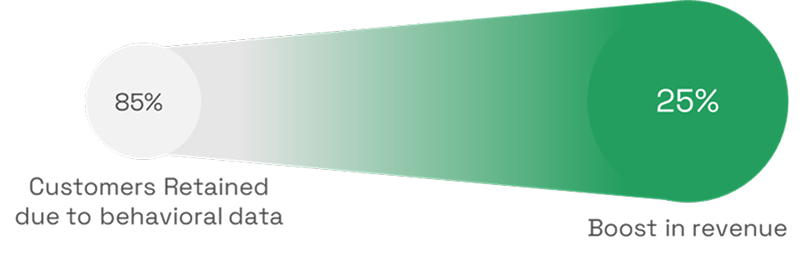
Companies that leverage customer behavioural analytics outperform peers by 85% in sales growth and more than 25% in gross margin.
Predictive Insights
Beyond understanding current behaviour, these analytics enable you to anticipate future actions. By recognizing patterns and trends, you can proactively address customer needs, innovate product offerings, and stay ahead of market shifts.
Security and Fraud Detection
In the realm of cybersecurity, user behavior analytics plays a crucial role. By establishing baselines of normal user behaviour, anomalies can be detected in real-time, signalling potential security threats such as unauthorized access or fraudulent activities.
Data-Driven Decision-Making
Integrating behavioural analytics into your strategy ensures that decisions are grounded in actual user behaviour rather than assumptions. This leads to more effective product development, marketing strategies, and overall business operations.
Behavioral analytics is only as good as the tracking behind it. Is yours holding up?
How to Analyze Customer Behavior for Better Campaigns
Through behavioral data analysis, marketers can uncover hidden motivations that traditional analytics may overlook. Leading behavior analytics tools and behavioral analytics tools empower brands to visualize these journeys in real time.
Orchestrating cross-channel journeys through digital behavior analytics starts with implementation accuracy, even the best segmentation strategy fails if the underlying tracking is flawed. It's a principle that Xerago’s TrueMeasure applies across every engagement, treating tracking integrity as the foundation, not an afterthought.
Raw behavioural data is meaningless without the right framework to extract insights and drive decisions. To turn user actions into measurable impact, you need the right components in place.
1. Event Tracking and Data Collection
Everything starts with tracking the right user interactions. Clicks, scrolls, session durations, abandoned carts, and even cursor movements provide a wealth of information.
Tools like Google Analytics, Mix panel, and Amplitude capture these events in real time.
Even with the right tools in place, capture isn't the same as accuracy.
Across audits run using Xerago TrueMeasure, 15–30% of tracked interactions typically show some form of tracking gap
It might be a missing tag, a broken trigger, an event firing inconsistently. Every audit conducted so far has surfaced at least one critical gap significant enough to affect reporting. The behavioural data feeding into segmentation, funnels, and personalization is often less complete than the dashboards suggest.
See How Much of Your Behavioural Data You're Actually Capturing
2. User Segmentation and Behavioural Cohorts
Not all users behave the same way.
Behavioral analytics allows you to group users based on actions rather than demographics alone.
For example, you can segment users who engage with a product demo but never convert, enabling targeted follow-ups.
3. Funnel and Path Analysis
Understanding where users drop off in their journey is crucial. A well-structured funnel analysis identifies conversion bottlenecks, while path analysis reveals unexpected user flows.
How Behavioural Analytics Improves Customer Engagement
Behavioral analytics gives you a clear view of how users interact with your brand, helping you make informed choices that drive engagement, retention, and revenue. Businesses that leverage behavioural insights outperform their competitors in growth and profitability.
By understanding not just what customers do but why they do it, you can create personalized experiences, remove friction, and predict future actions.
The result?
Higher conversion rates, better customer satisfaction, and increased lifetime value.
From Behavioural Insights into Business Value
Understanding customer behaviour isn’t just about tracking interactions - it’s about using those insights to drive revenue, retention, and efficiency.
Businesses that apply behavioural analytics effectively see measurable improvements across multiple areas.
Key Business Benefits of Behavioural Analytics
| Business Impact | How Behavioural Analytics Helps |
|---|---|
| Higher Conversion Rates | Personalizes experiences, optimizes landing pages, triggers automated responses |
| Reduced Customer Churn | Identifies disengagement signals early and enables proactive interventions |
| Optimized Marketing Spend | Targets customers based on actual behaviours rather than broad demographics |
| Better Product Development & UX | Analyses feature adoption trends and usability issues to improve user experience |
| Increased Customer Lifetime Value (CLV) | Predicts high-value customers and enables targeted retention strategies |
The Impact of Behaviour-Driven Strategies on Customer Engagement
Customer engagement isn’t just about getting attention - it’s about keeping it.
Behavioral analytics helps businesses craft strategies that resonate with customers, driving deeper interactions and long-term loyalty.
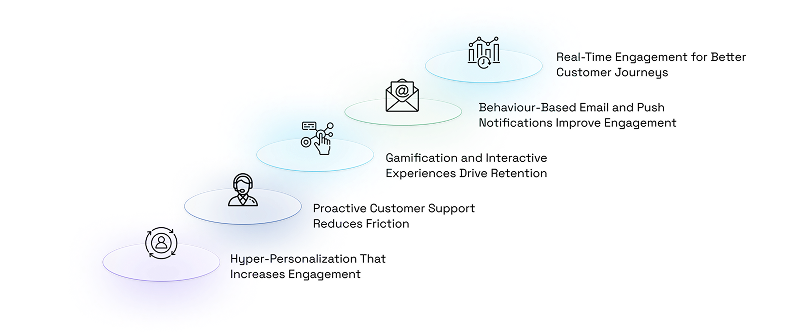
1. Hyper-Personalization That Increases Engagement
Generic marketing doesn’t work any more. Customers expect experiences tailored to their preferences and behaviours. Behavioural analytics enables real-time personalization, from dynamic website content to AI-driven recommendations.
2. Proactive Customer Support Reduces Friction
Predicting customer issues before they escalate improves satisfaction. Behavioural analytics can flag high-friction points - such as repeated failed login attempts or long checkout processes - allowing businesses to intervene early.
3. Gamification and Interactive Experiences Drive Retention
Tracking user behaviour helps businesses introduce gamification elements that keep customers engaged.
4. Behaviour-Based Email and Push Notifications Improve Engagement
Instead of blasting generic emails, behaviour-driven automation ensures messages reach customers when they’re most likely to engage.
5. Real-Time Engagement for Better Customer Journeys
Behavioural analytics enables businesses to react at the moment.
Whether it’s a chatbot assisting a confused shopper or a special offer triggered for an abandoning user, these real-time interventions significantly boost conversions.
Measuring the ROI of Behaviour Analytics Tools in Enterprise Environments
Investing in behavioural analytics tools is only justified if they deliver measurable value. For enterprises, the return on investment (ROI) must be clear—boosting revenue, optimizing costs, and improving customer retention. Here’s how businesses can quantify the impact of these tools.
1. Improved Conversion Rates and Revenue Growth
One of the most direct ways to measure ROI is through conversion optimization. Behavioural analytics identifies patterns that lead to higher sales, enabling businesses to refine their strategies.
2. Reduced Customer Acquisition Costs (CAC)
By segmenting users based on behavior rather than broad demographics, enterprises can refine marketing campaigns and reduce wasted ad spend.
3. Higher Customer Lifetime Value (CLV)
Behavioural insights help predict high-value customers and personalize their experiences, increasing retention and lifetime value.
4. Lower Churn and Higher Retention Rates
Behavioural analytics enables proactive engagement, reducing churn by identifying at-risk customers early.
5. Operational Efficiency and Cost Savings
Automating customer interactions based on behavioral triggers saves time and resources. AI-driven analytics can reduce support tickets and manual interventions, cutting operational costs.
Even before automation kicks in, tools like Xerago TrueMeasure cut weeks off the implementation and QA cycle itself, so analytics teams spend less time validating data and more time acting on it.
Consider these behavioral analysis examples: a sudden spike in session drop-off after a CTA, or repeated visits to pricing pages without conversions.
These are classic behavioral analytics examples that, when decoded, can inform campaign refinement. In fact, behavioral analysis marketing has become essential for brands wanting to hyper-personalize at scale – a philosophy core to Xerago’s behavioural analytics approach.
ROI Measurement Framework for Behavioural Analytics
| Key Metric | How It’s Measured |
|---|---|
| Revenue Growth | Increase in sales due to personalization & insights |
| Customer Acquisition Cost | Reduction in ad spend per new customer |
| Customer Lifetime Value (CLV) | Increase in repeat purchases & long-term revenue |
| Churn Reduction | Percentage of customers retained through intervention |
| Operational Efficiency | Cost savings from automated processes |
Applying Behavioural Analytics to Optimize Customer Engagement
Collecting behavioural data is only the first step.
To truly optimize customer engagement, businesses must apply these insights strategically, personalizing experiences, refining customer journeys, and predicting intent.
Behavioural analysis allows you to move beyond reactive engagement to proactive optimization. By understanding how customers interact in real-time, you can deliver hyper-personalized experiences, eliminate friction points, and prevent churn before it happens.
Using Real-Time Behavioural Data for Hyper-Personalization
Personalization has evolved beyond basic segmentation. Customers now expect brands to respond to their actions in real time, delivering relevant content, offers, and experiences at the exact moment they need them.
Key Applications of Real-Time Behavioural Data
| Strategy | How It Works | Impact on Engagement |
|---|---|---|
| Dynamic Website Personalization | Adjusts content and recommendations based on user interactions | Increases relevance and session duration |
| AI-Driven Product Recommendations | Analyzes browsing history and purchase patterns to suggest products | Enhances conversion rates and user satisfaction |
| Contextual Email & Push Notifications | Sends behaviour-triggered messages like abandoned cart reminders | Improves open rates and encourages immediate action |
| Personalized Chatbots & Virtual Assistants | Uses past interactions to offer relevant responses and support | Enhances customer experience and reduces support tickets |
Customer Journey Mapping with Behavioural Insights
Understanding how customers move through your digital ecosystem is critical for optimizing engagement. Behavioural analytics provides a data-driven approach to mapping this journey, helping businesses identify pain points, streamline experiences, and drive conversions.
Tracking the Awareness Stage
At the top of the funnel, behavioural analytics helps track first-touch interactions, revealing which channels drive the most traffic and engagement. This insight allows businesses to optimize ad spend, refine content strategies, and target high-intent users more effectively.
Enhancing the Consideration Phase
Once customers explore products or services, their browsing patterns, time spent on pages, and comparison behaviors provide crucial data. Behavioural insights allow brands to personalize experiences by recommending relevant content, retargeting undecided users, and addressing potential objections before they arise.
Optimizing the Decision-Making Process
The checkout or sign-up process is often where friction emerges. Behavioural analytics highlights common drop-off points, whether it's an abandoned cart, an unclear call-to-action, or a complex form. Streamlining these steps, offering incentives, and reducing unnecessary fields can significantly improve conversions.
Driving Retention and Loyalty
Beyond the purchase, customer engagement doesn’t stop. Monitoring post-purchase interactions, support requests, and feature usage helps businesses proactively nurture relationships. Sending personalized follow-ups, offering loyalty rewards, and addressing user concerns in real time keeps customers engaged long after the first transaction.
Encouraging Advocacy
Customers who actively share feedback, refer others, or engage with a brand on social media play a crucial role in organic growth. Behavioral analytics identifies these high-value users, making it easier to encourage reviews, testimonials, and referrals through targeted incentives.
Predicting Customer Intent and Preventing Churn with Behaviour Analytics
Customer retention is just as important as acquisition. Behavioral analytics helps businesses predict when customers are likely to churn, allowing for proactive interventions.
Key Indicators of Customer Churn
- Decreased Engagement: A drop in login frequency, fewer interactions, or shorter session times often signal declining interest. Sending re-engagement emails or exclusive offers can bring users back.
- Drop in Purchase Frequency: If a customer who once made regular purchases slows down, personalized product recommendations or loyalty incentives can reignite interest.
- Increase in Support Tickets: A rise in complaints or unresolved issues suggests dissatisfaction. Improving response time and proactively addressing concerns can prevent frustration from turning into churn.
- Feature Abandonment: Users who stop engaging with key product features may need guidance. Sending tutorials, onboarding messages, or customer success outreach can boost usage.
- Competitor Interest: If users frequently visit competitor sites or cancel premium services, offering exclusive benefits, discounts, or showcasing unique value propositions can help retain them.
How Predictive Analytics Helps Reduce Churn
- Early Warning System: Identifying disengagement patterns in real time enables businesses to take action before customers leave.
- Personalized Retention Strategies: Instead of generic win-back campaigns, targeted offers and interventions based on actual user behaviour create better results.
- Proactive Customer Support: Addressing potential pain points before they escalate improves user satisfaction and strengthens brand loyalty.
- Ongoing Experience Optimization: Behavioural insights help refine the customer journey, ensuring that engagement remains high and users continue to find value.
All of this depends on one assumption: that the behavioral signals being tracked are accurate in the first place. A churn-prediction model built on broken tags will flag the wrong users, which is why teams use Xerago’s TrueMeasure to validate the data layer before trusting it to drive retention decisions.
Choosing the Right Behavioural Analytics Tools for Your Business
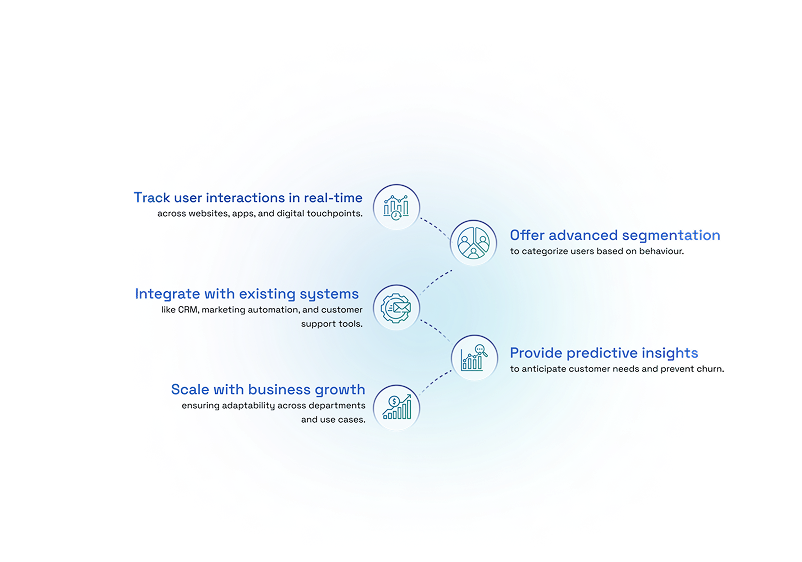
Selecting the right behavioral analytics tool is crucial for turning user data into actionable insights. Since behavioral analytics depends entirely on what the platform captures, businesses must evaluate features, scalability, and integration capabilities to ensure the best fit for their needs.
An effective behavioural analytics tool should:
Key Behavioral Analytics Tools for Marketers for Enterprise Use
When selecting a behavioural analytics platform, businesses need to consider factors such as data tracking capabilities, AI-driven insights, ease of integration, and scalability.
Here’s a comparison of some of the leading platforms used by enterprises.
1. Google Analytics 4 (GA4)
- Best for: Web and app tracking with deep integration into Google’s ecosystem.
- Key Features: Event-based tracking, AI-powered insights, predictive metrics, and cross-platform reporting.
- Why Choose It: Ideal for businesses already using Google Ads and Tag Manager, providing free yet powerful analytics.
2. Mixpanel
- Best for: Product analytics and user journey tracking.
- Key Features: Real-time data visualization, cohort analysis, A/B testing support, and funnel tracking.
- Why Choose It: Helps SaaS and mobile app businesses understand user engagement at a granular level.
3. Amplitude
- Best for: Deep behavioural insights and customer segmentation.
- Key Features: Advanced analytics dashboards, retention analysis, behavioural cohorts, and AI-driven predictions.
- Why Choose It: Excellent for companies looking to optimize user retention and feature adoption.
Your Analytics Are Only as Good as Your Tags
GA4, Mixpanel, and Amplitude are only as reliable as the data feeding them. If tags are misconfigured, data layer events are missing, or implementation drifts after a site update, every insight built on top with segmentation, funnels, predictive models which inherits that error silently.
This is the layer most behavioral analytics strategies skip.
Xerago's TrueMeasure addresses it directly. It auto-converts business KPIs into structured specifications, generates data-layer-driven tags without manual developer work, and validates implementation accuracy across web and mobile through automated page scans and real-time payload checks.
For analytics teams, it removes the weeks of manual QA that typically sit between "we chose a tool" and "we trust the data."
What if your biggest analytics problem isn't the tool, but the tracking behind it? It’s time to find out.
When Data Meets Human Intent
Behavioral analytics is no longer just about tracking clicks, page views, and session durations. It’s evolving into a sophisticated engine that deciphers human intent, predicts actions, and drives hyper-personalized experiences.
As technology advances, businesses that fail to harness the next wave of behavioral insights will be left behind.
- AI and Machine Learning will refine behavioral predictions, moving beyond past trends to real-time, intent-based forecasting.
- Expect models that detect micro-intentions - subtle shifts in user behavior that signal churn, purchase intent, or engagement drops before they occur.
- Generative AI-powered prescriptive analytics will not just highlight anomalies but recommend automated next-best actions in real time.
Today’s behavioral analytics solutions react to data; tomorrow’s will anticipate behavior.
Whether you're just defining your behavioral analytics strategy or looking to scale existing customer behavior analytics programs, Xerago's suite of behavioral analytics services, including TrueMeasure for implementation accuracy which ensures every signal becomes a lever for growth.

Kaviarasu S
Associate Content Writer
Xtelligence Inbox.
Your weekly dose of marketing smarts!
Related Posts


Digital Analytics
Real-Time Personalization Is Losing You Conversions. Here Is How to Take Them Back.

















Digital Analytics
Customer Segmentation: Using Predictive & Adaptive Models for Targeted Marketing