---blog Title---
Customer Journey Optimization: Tools and Platform to Consider
---desktop---
---mobile---
Understanding what draws customers in and keeps them loyal is key for any business. To truly connect, it’s important to get a clear picture of their needs, motivations, and pain points. This helps craft a smooth, engaging customer experience. Customer Journey Optimization (CJO) takes this a step further by enhancing every part of the journey, from first contact to final purchase.
A well-optimized customer journey allows businesses to create seamless, personalized experiences that keep customers engaged and loyal. For instance, many retail apps now offer features like personalized recommendations, rewards programs, and order-ahead options. These features make it easy for customers to find what they want, get exclusive perks, and save time.
In this guide, we’ll break down what multi-touch attribution is, why it’s important, how it works in a way that’s easy to understand, and the tools used.
---outlined-cta---
[ Download the Ultimate Guide ] - Personalizing Customer Journeys Using Adobe Journey Optimizer
This kind of streamlined, customer-centered journey not only boosts satisfaction but also encourages repeat business, demonstrating how essential an optimized customer journey is for building lasting relationships.
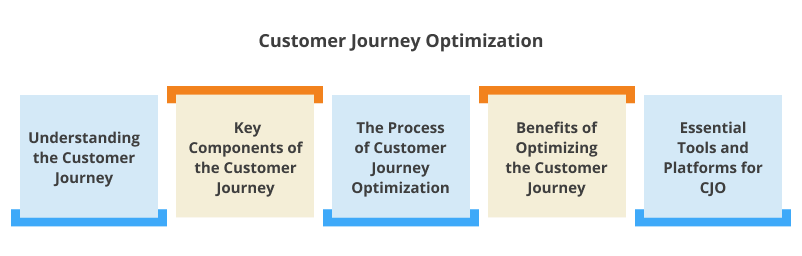
Through mapping and connecting each touchpoint, brands can design a personalized journey that makes customers feel appreciated. In this blog, we’ll dive into the essentials of CJO, explore its benefits, and look at the tools that make it all possible.
What is Customer Journey?
The customer journey represents the complete, interconnected path a customer takes from initial awareness of a brand to making a purchase and beyond. It encompasses every stage and customer touchpoint that customers encounter during their relationship with a business, including website visits, social media interactions, email communications, customer service calls, and post-purchase follow-ups.
Each stage in this journey reflects a customer's evolving needs, expectations, and level of engagement. The main stages of the customer acquisition journey typically include:
Awareness: When the customer becomes aware of the brand through advertising, social media, or word of mouth.
Consideration: When the customer actively considers the brand's offerings and explores products or services.
Purchase: The decision-making point when the customer makes a purchase.
Post-Purchase Engagement: Interaction after purchase, which could involve customer support, reviews, or follow-up marketing.
Loyalty and Advocacy: Long-term engagement that turns satisfied customers into loyal advocates who may refer others to the brand
What Is Customer Journey Optimization and Why Is It Important?
Customer Journey Optimization (CJO) involves actively managing and enhancing each stage and touchpoint in the customer journey to ensure a seamless, consistent, and satisfying experience.
By analyzing and adjusting how customers interact with a brand at every step, businesses can build a personalized customer journey that aligns with individual needs and maximizes satisfaction, leading to stronger customer relationships and improved business outcomes.
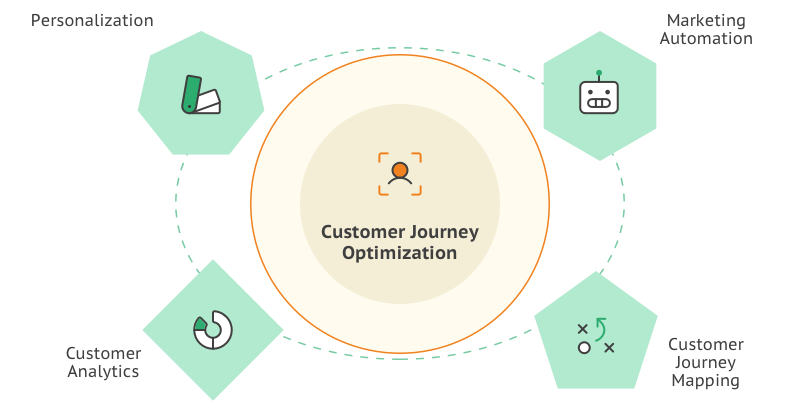
Through CJO, companies leverage tools for customer interaction analysis, customer journey mapping, and journey analytics to gain insights into customer behaviors and preferences. These insights help refine each stage of the journey, from the sales customer journey to post-purchase engagement, using customer journey optimizer tools to address any friction points.
---outlined-cta---
Ready to Enhance Your Customer Journey? Download the Guide to Redefining Experiences with Gen AI!
Top Benefits of Optimizing Customer Journey
Understanding and mapping this journey enables brands to meet customers' needs at each stage and identify areas where improvements can enhance customer experience and conversion rates. Optimizing the customer journey offers several benefits:
- Upgraded customer satisfaction results in increased customer loyalty and retention.
- Identifying and resolving pain points in the customer journey improves conversion rates from prospects to customers.
- Personalization of customer interactions fosters repeat purchases and enhances customer lifetime value (CLV).
- Utilizing journey analytics provides critical insights into customer preferences and behaviors, enabling data-driven decision-making.
- Leveraging real-time customer data enhances targeted marketing strategies and optimizes resource allocation.
- Customized marketing communications improve engagement rates by aligning with individual customer needs and expectations.
- Cross-channel consistency establishes brand trust and recognition, promoting a seamless customer experience.
- Increased customer retention drives revenue growth through repeat purchases and long-term customer relationships.
Tools for Customer Journey Optimization
Through Customer Journey Optimization, brands can deliver a seamless customer experience across all channels, increasing loyalty and retention. It also provides a competitive edge by creating a memorable, unique customer journey. Below are the categories of tools that can drive user journey improvement and help manage every phase of the customer journey.
Tools that are involved in Customer Journey Optimization
Customer Journey Mapping Tools
- UXpressia
- Custellence
- Smaply
- Lucidchart
Customer Analytics Tools
- Adobe Analytics
- Google Analytics
- Mixpanel
- Hotjar
Personalization Tools
- Clevertap
- Segment
- Insider
- Webengage
Marketing Automation tools
- Marketo engage
- Salesforce paradot
- HCL Unica
- Hubspot marketing hub
Let’s dive into them!
1. Customer Journey Mapping Tools
Customer journey mapping is about visualizing and understanding every stage the customers go through while interacting with a business. By identifying key moments, pain points, and opportunities through mapping, businesses can strategically optimize the behavior and processes along the customer journey,
UXpressia: A cloud-based tool that helps visualize, share, and refine customer journey mapping for teams.
Custellence: It enables collaboration on loyalty program customer journey maps and provides insights through emotion monitoring.
Smaply: Helps visualize and analyze customer journey strategies and touchpoints, fostering better understanding and customer experience enhancement.
Lucidchart: Known for customizable templates and real-time collaboration, enabling brands to capture complex journeys easily.
---outlined-cta---
Transform Customer Journeys with Adobe Journey Optimizer – Download the Ultimate Guide
2. Customer Behavior Analytics Tools
Customer Behavior Analytics involves examining customer data and interactions to understand their preferences, actions, and emerging trends. This helps businesses better cater to their needs and foster stronger relationships resulting in improved conversion rates.
It involves collecting and examining data from various sources such as transaction histories, website interactions, social media engagements, customer surveys, demographic information, and push notification responses.
Adobe Analytics: Provides journey analytics across touchpoints, offering personalized insights for customer journey solution creation
Google Analytics: Monitors real-time customer interactions, supporting user journey improvement through data insights.
Mixpanel: Tracks user behavior in real-time and segments customers based on customer journey strategies, which enhances engagement.
Hotjar: Offers visual tools like heatmaps and session recordings, allowing businesses to fine-tune customer experience optimization by understanding user behavior.
3. Personalization Tools
Personalization tools create a customized customer journey by delivering relevant content based on customer preferences. Personalization in customer journey optimization offers a unified experience by interacting with the individual's preferences which promotes long-term retention and better customer engagement.
Clevertap: Collects and segments data to support personalized customer journeys across multiple channels.
Segment: Enables customer interaction analysis through real-time data collection, aiding in user journey improvement and customer touchpoint optimization.
Insider: Uses AI-driven insights to activate data in real-time, fostering seamless customer experiences with campaigns and supporting customer experience enhancement.
WebEngage: Personalizes engagement across channels, allowing brands to refine customer service optimization and support customer journey solutions.
---outlined-cta---
Curious About Gen AI? Discover How to Redefine Customer Experiences – Download the Guide
4. Marketing Automation Tools
Marketing automation facilitates lead nurturing workflows that nurture prospects with relevant content and communications over time, gradually moving them through the sales funnel & campaigns.
Campaigns aim to engage customers through various channels and touchpoints, encouraging them to interact with the brand, explore its offerings, and take desired actions such as signing up for newsletters, visiting the website, or making a purchase.
By automating personalized follow-up emails, triggered based on specific actions or milestones achieved by the prospect, businesses can build trust, establish credibility, and increase the likelihood of conversion.
Marketo Engage: Integrates customer data to enhance customer touchpoint optimization and track the effectiveness of customer retention strategies.
Salesforce Paradot: Manages personalized engagement campaigns, automating touchpoints to maintain a consistent customer acquisition journey.
HCL Unica: Allows marketers to conduct A/B testing, enabling customer experience enhancement through ongoing improvement of the journey.
Hubspot Marketing Hub: Offers features like journey analytics and revenue attribution to maximize conversion rate optimization.
How to Improve Your Customer’s Journey?
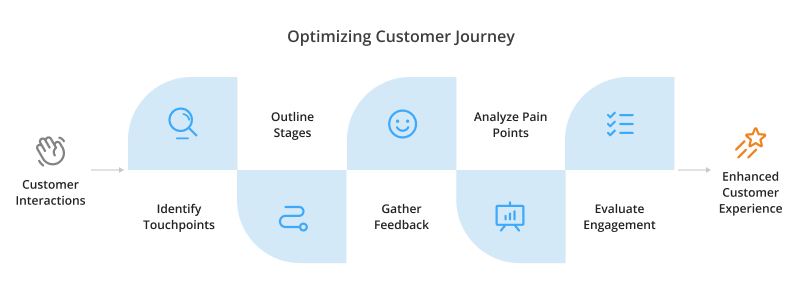
Each interaction a customer has with your brand is a chance to build loyalty and trust. Here’s a guide on mapping and improving the customer journey, helping you adapt to the modern customer.
-
Identify Key Touchpoints Start by mapping where your customers interact with your brand. These can be your website, emails, social media, or customer service channels. This helps you see where your brand meets your customers and the paths they take.
-
Outline Customer Stages Each customer journey has stages: Awareness, Consideration, Purchase, and Loyalty. Understanding these stages lets you tailor your messaging. For instance, in the Awareness stage, focus on educational content rather than hard-sell tactics.
-
Gather Customer Feedback Listen to your customers. Feedback from surveys, reviews, and direct conversations reveals what they like, dislike, and want more of. These insights show areas where the journey is smooth—and where it may be losing them.
-
Analyze Pain Points Not every part of the journey will be seamless. Identifying friction points, like a complicated checkout or lack of personalized communication, helps you spot where improvements are needed. This can be as simple as speeding up response times or creating more personalized emails.
-
Evaluate Cross-Channel Engagement Customers don’t stick to one platform. They might browse on mobile, add items to their cart on a laptop, and later complete the purchase on a tablet. Make sure each touchpoint offers a consistent, easy experience. Cross-channel engagement keeps the journey smooth and minimizes drop-offs.
-
Review and Update Regularly Customer expectations and technology are constantly changing. Regularly revisit your journey map to stay aligned with what your audience values. For example, as more people value fast, personalized service, consider adding live chat or improving your FAQ section.
How You Can Adapt to the Evolving Customer Journey Landscape
The modern customer journey is more complex than ever, with buyers making decisions across multiple devices, channels, and even influencers. Adapting to this journey means thinking beyond traditional steps:
- Invest in Personalization: Customers expect experiences tailored to them. This doesn’t mean overhauling every touchpoint but creating small, meaningful interactions. For instance, sending product recommendations based on past purchases can enhance their experience.
- Encourage Flexibility: Your team’s adaptability is crucial, especially in fast-evolving digital spaces. Hiring people who are open to change and continuous learning can make your brand agile and responsive to shifts in customer needs.
- Balance Technology with a Human Touch: Technology is helpful, but it can’t replace a genuine connection. Use tools to streamline processes but ensure customers feel heard and valued by keeping personal interactions in play.
- Highlight Cross-Channel Consistency: Customers don’t differentiate between online and offline channels; they expect a cohesive experience. Make sure they find the same message and quality whether they’re on social media, your website, or speaking with your support team.
Mapping and improving the customer journey isn’t a one-time task—it’s an ongoing effort that requires listening, adapting, and being proactive. Keep your approach analytical but practical, constantly looking for high-level insights.
Key Take Away
By creating a journey that is consistent, personalized, and responsive, you’re not just adapting to the modern customer but building loyalty and trust that lasts well beyond the initial sale.
Customer journey optimization is essential for providing a seamless, engaging experience across all channels. By leveraging the right customer journey optimizer tools and strategies, businesses can boost loyalty, improve retention, and foster long-term growth.
Embracing customer experience enhancement methods and investing in analytics and automation tools allow brands to stay ahead in a competitive landscape, ensuring a memorable journey for every customer.