---blog Title---
Beyond Lift-and-Shift: Unveiling Advanced Strategies for Rearchitecting Legacy Applications for the Cloud
---desktop---

---mobile---

Introduction
The lift-and-shift approach has long been a common strategy in the realm of cloud migration, as it offers a relatively quick and straightforward way to move applications to the cloud. However, this method often falls short when dealing with legacy applications, which are more likely to have intricate dependencies and monolithic architectures. The limitations of lift-and-shift become increasingly evident for mid-market and enterprise companies that often grapple with complex legacy landscapes that require more nuanced solutions. As the demand for scalability, agility, and cost-effectiveness continues to rise, these organizations are increasingly looking to modernize their legacy applications for the cloud.
Rearchitecting legacy applications presents a compelling solution to these challenges, offering a pathway to optimize performance, enhance scalability, and drive cost savings in the cloud environment. By strategically refactoring, containerizing, or adopting serverless architectures, you can unlock the full potential of your legacy systems, leveraging cloud-native technologies to meet evolving business needs.
In this article, we do an in-depth exploration of advanced strategies for migrating legacy applications to the cloud, moving beyond the basic lift-and-shift approach. With this, Xerago aims to provide you with the knowledge and understanding necessary to make informed decisions and successfully navigate the complexities of legacy application migration in the cloud environment.
Modernizing Legacy Applications: Why Lift-and-Shift Isn't Enough?
The lift-and-shift approach entails migrating applications to the cloud with minimal modifications to their architecture or code. Essentially, it involves lifting the existing infrastructure and shifting it to a cloud environment without substantial alterations. We see this method is often preferred for its apparent simplicity and expedited implementation, enabling organizations to swiftly transition their applications to the cloud without the need for extensive redevelopment or reconfiguration.
Despite its benefits, the lift-and-shift approach has several limitations, particularly when applied to legacy applications.
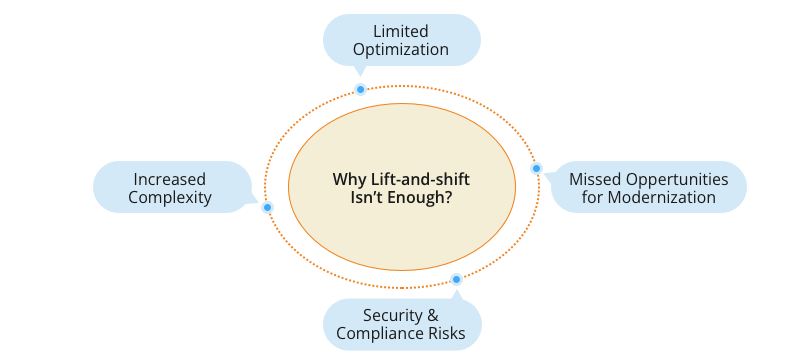
- Limited Optimization: The lift-and-shift approach often fails to optimize legacy applications for the cloud environment. As legacy applications possibly have inefficient architectures, outdated technology stacks, and dependencies that are not conducive to cloud-native deployment, without proper optimization, they will experience performance bottlenecks, scalability issues, and higher operational costs in the cloud.
- Missed Opportunities for Modernization: By migrating legacy applications without making significant changes, you miss out on opportunities for modernization and improvement. Legacy systems may lack features such as auto-scaling, microservices architecture, and serverless computing, which can enhance agility, flexibility, and cost-effectiveness in the cloud. Without modernization, you will be more likely to face challenges associated with maintaining and supporting legacy technology stacks.
- Increased Complexity and Technical Debt: While the lift-and-shift approach offers a quick path to cloud migration, it can lead to increased complexity and technical debt over time. Legacy applications may accumulate technical debt due to outdated code, architecture, and dependencies, which can impede future development efforts and hinder innovation. Without addressing underlying technical debt, you will struggle to maintain and evolve their applications in the cloud.
- Security and Compliance Risks: Legacy systems lack modern security features such as encryption, identity management, and access controls, which are essential for protecting data in the cloud. Migrating the legacy applications to the cloud without adequate security measures and compliance controls can expose your organizations to security risks, data breaches, and regulatory violations.
In light of these limitations, Xerago advocates for unveiling advanced strategies for rearchitecting legacy applications for the cloud. By embracing advanced methodologies for rearchitecting legacy applications, organizations can overcome the constraints of the lift-and-shift approach and achieve optimal performance, scalability, and cost-effectiveness in the cloud.
Advanced Rearchitecting Strategies: Streamline your Legacy Applications and Level up Your Cloud Journey
Instead of merely transplanting existing infrastructure and applications to the cloud, modernization entails rethinking and restructuring legacy systems to leverage the full potential of cloud-native technologies. This paradigm shift reiterates the importance of agility, innovation, and efficiency in the digital age, driving enterprises to embrace advanced rearchitecting strategies to stay competitive and future-proof their operations.
---outlined-cta--- As the momentum towards digital transformation gains traction, Gartner forecasts that expenditure on public cloud services will surpass 45% of total enterprise IT spending by 2026. This marks a substantial increase from the less than 17% observed in 2021.
The three powerful approaches Xerago advocates for modernizing legacy applications in the cloud: refactoring, containerization, and serverless computing.
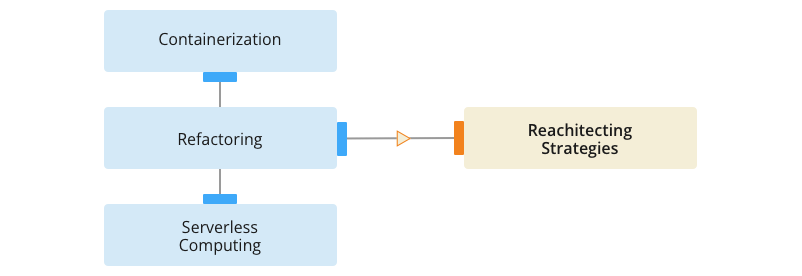
Refactoring: A Strategic Overhaul
Refactoring in the context of legacy application migration involves the strategic restructuring and optimization of codebase, architecture, and design patterns to align with cloud-native principles. Unlike the lift-and-shift approach, refactoring aims to improve the scalability, performance, and maintainability of legacy systems in the cloud environment. This process includes breaking down monolithic applications into microservices, adopting modern development practices, and optimizing resource utilization for enhanced efficiency.
Advantages:
- Enhanced Scalability: Breaking down monolithic architectures into modular components allows for greater scalability, enabling each component to scale independently to meet varying workloads and growth demands efficiently. This architectural flexibility ensures that resources are allocated dynamically, ensuring optimal performance during peak usage periods while avoiding over-provisioning during quieter times, ultimately providing a seamless user experience regardless of demand fluctuations.
- Improved Performance: Refactoring improves application performance by optimizing code, enhancing algorithms, and reducing technical debt, resulting in faster response times, higher throughput, and enhanced user experience. By streamlining and optimizing the application's underlying architecture, performance bottlenecks can be addressed, allowing for smoother execution, reduced latency, and improved reliability even under heavy workloads.
- Cost-Efficiency: By migrating to cloud platforms, your organization can benefit from pay-as-you-go pricing models, eliminating the need for costly upfront investments in hardware and reducing maintenance expenses. Besides, optimization efforts such as right-sizing resources, implementing auto-scaling, and utilizing serverless computing further enhance cost-efficiency by maximizing resource utilization and minimizing waste.
---outlined-cta---
DO YOU KNOW?
The was valued at USD 2.5 Billion in 2023 and is anticipated to reach USD 12 Billion by 2030, with a projected compound annual growth rate (CAGR) of 20% between the forecast period of 2024 to 2030.
Considerations:
- Time and Resource Intensiveness: Refactoring legacy applications requires significant time and resources due to its complexity, necessitating thorough planning and execution. Thus, adequate allocation of skilled personnel, tools, and infrastructure is crucial to ensure a smooth and successful migration process.
- Potential Workflow Disruptions: Refactoring can cause current workflows and processes to change, which could have an effect on user experience and business operations. To control expectations and reduce interruptions, careful planning, coordinating, and communication with stakeholders is required.
- Impact on Business Continuity: Businesses must consider how refactoring will affect business continuity so that there is as little disruption to vital processes as possible. Throughout the migration process, strategies for risk mitigation and service level maintenance should be carefully devised.
Containerization: Packaging for Portability
Containerization revolutionizes the deployment of legacy applications by encapsulating them and their dependencies into portable, standardized units known as containers. This approach facilitates seamless deployment across different environments, ensuring consistency and reliability. For legacy applications, containerization offers a modernized deployment method, enabling easier management, scalability, and portability while minimizing compatibility issues and enhancing overall efficiency in the cloud environment.
Advantages:
- Consistent Environment: Containers ensure consistency between development, testing, and production environments, reducing the likelihood of compatibility issues and ensuring smoother deployments.
- Scalability: Containerized applications can be easily scaled up or down based on demand. It, in turn, will allow you to efficiently utilize resources and adapt to changing workloads.
- Resource Efficiency: As containers are lightweight and share the host system's kernel, they will result in faster startup times, efficient resource utilization, and reduced overhead compared to traditional virtual machines.
- Portability: Containers can run on any infrastructure that supports containerization, including public cloud, private cloud, and on-premises environments which will facilitate seamless migration and hybrid cloud deployments.
Considerations:
- Learning Curve: Containerization introduces new technologies and tools like Docker and Kubernetes. Development and operations teams will need training to effectively manage containerized environments and utilize these tools to their full potential.
- Security: While containers provide a layer of isolation compared to traditional deployments, they are not inherently secure. Organizations need to implement security best practices throughout the container lifecycle to prevent vulnerabilities and potential breaches.
- Orchestration Complexity: Managing a large number of containers across various environments will become complex. Container orchestration platforms like Kubernetes automate tasks like deployment, scaling, and management, simplifying operations for large-scale containerized deployments. However, Kubernetes itself can have a learning curve for resources unfamiliar with its functionalities.
Serverless Computing: Unleashing Scalability and Flexibility
According to the RightScale State of the Cloud report in 2023, 41% of enterprises have already implemented serverless technologies, with an additional 34% intending to integrate them within the following year. In the context of legacy migration, serverless computing offers a compelling approach to modernize applications, enabling organizations to leverage the benefits of scalability, flexibility, and cost-efficiency. By adopting serverless technologies, legacy applications can be refactored or re-architected to embrace event-driven, stateless functions, facilitating seamless integration with cloud-native environments while minimizing operational overhead.
Advantages:
- Cost Savings: Serverless computing operates on a pay-as-you-go model, where organizations only pay for the resources consumed. It will result in significant cost savings compared to traditional infrastructure provisioning.
- Auto-Scaling: Serverless platforms automatically scale resources based on demand, ensuring optimal performance and responsiveness during peak usage periods while minimizing resource wastage during idle times.
- Reduced Maintenance: With serverless computing, infrastructure management tasks such as provisioning, scaling, and maintenance are handled by the cloud provider, allowing developers to focus on building and deploying applications without worrying about underlying infrastructure.
Considerations:
- Performance: While serverless platforms offer scalability and flexibility, performance may vary depending on factors such as function size, memory allocation, and execution environment, requiring careful optimization for latency-sensitive applications.
- Cold Start Issues: Serverless functions may experience cold start delays, where the platform spins up a new instance of the function in response to a request, resulting in increased latency for the first invocation. You should mitigate cold start issues through optimization techniques and warm-up strategies to minimize impact on user experience.
Factors to Choose the Best Option Based on Specific Applications:
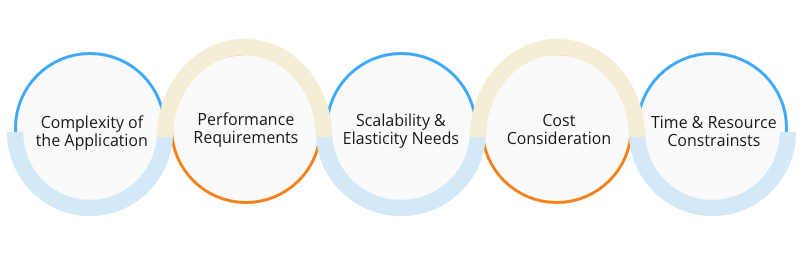
Complexity of the Application:
- Delve deep into the complexity of your legacy application, analyzing its architecture, dependencies, and codebase intricacies.
- Identify whether significant restructuring and optimization are necessary to bring the application in line with cloud-native principles.
- Recognize that refactoring will be the ideal path for applications with intricate and monolithic architectures, while simpler applications might find success with a lift-and-shift approach.
Performance Requirements:
- Scrutinize the performance demands of your application within the cloud environment, evaluating its scalability, responsiveness, and resource utilization needs.
- Acknowledge that refactoring becomes imperative for applications encountering performance bottlenecks or scalability hurdles, whereas those with minimal requirements may suffice with a lift-and-shift strategy.
Scalability and Elasticity Needs:
- Determine the scalability and elasticity prerequisites of your application, anticipating fluctuations in demand and traffic patterns.
- Contemplate whether dynamic scaling capabilities are essential to cater to varying workloads, recognizing that refactoring or adopting cloud-native architectures like microservices or serverless computing may be pivotal for applications seeking heightened scalability and elasticity.
Cost Considerations:
- Thoroughly assess the cost implications associated with each migration approach, encompassing upfront investments and long-term operational expenses.
- Factor in resource utilization, infrastructure provisioning, and management overhead, ensuring that the chosen strategy aligns with your budget constraints and offers the most cost-effective solution.
Time and Resource Constraints:
- Evaluate the availability of time, resources, and expertise required to execute each migration approach proficiently.
- Gauge whether your organization possesses the requisite skills and capacity to undertake the intricate process of refactoring or rearchitecting the application.
- Consider the potential impact on project timelines and business continuity, particularly if there's a stringent timeframe for completing the application migration.
By meticulously considering these factors, you can navigate the complexities of legacy application migration to the cloud with confidence, ensuring a seamless transition while maximizing the advantages of cloud-native technologies.
---insight-section---
Conclusion: The Power of Rearchitecture for a Cloud-Native Future
Lift-and-shift may provide a convenient entry in the cloud, but for genuine optimization and future readiness, mid-market and enterprise entities must surpass this initial phase. Legacy applications, reengineered with cloud-native principles at the forefront, unveil a heightened realm of agility, scalability, and cost-effectiveness. Through the utilization of advanced methodologies such as refactoring, containerization, and serverless computing, you can transform your applications into cloud-native powerhouses, ready to meet the demands of the ever-evolving digital landscape.
The decision to migrate and modernize legacy applications can seem daunting. Some of the initial steps can get you started are conducting cloud migration assessment and a consultation with cloud experts. (Reach out to Xerago anytime for cloud consultation!). By embracing cloud-native principles and investing in strategic rearchitecting, you can unlock the true potential of the cloud, gain a competitive edge and ensure your applications remain agile and scalable for years to come.