---blog Title---
The Customer-Centric Imperative: Designing Digital Experiences That Delight
---desktop---

---mobile---

Introduction
With the evolution of digital technologies at an unprecedented pace, there has been a dramatic change in the way customers consume information. Statistics shows the digital transformation market is expected to expand at a compound annual growth rate of 19.1%, increasing from $521.5 billion in 2021 to $1,275 billion in 2026. In this contemporary landscape, consumers possess unparalleled access to information and an abundance of choices. Gone are the times of constrained options and one-sided communication. Present-day customers can readily compare brands, conduct thorough product research, and provide immediate feedback, granting them remarkable influence and autonomy over their purchasing experiences.
In light of these shifts, organizations must adapt their strategies and embrace a customer-centric approach. This approach must extend beyond mere recognition of customers and focus on the creation of enjoyable digital experiences throughout every phase of the customer journey. According to Salesforce, 76% of customers desire a uniform experience, regardless of their method of engagement with a company, be it through phone calls, in-person interactions, social media interactions, and so forth. By placing the customer at the center of their digital strategies and investing in impactful digital experiences, organizations can unlock the full potential of the digital age, position themselves as advocates for customers, and reap the rewards of a loyal and engaged consumer base.
In this article, we delve deep into the imperative for organizations to prioritize customer-centric digital initiatives, offer insights on the key elements of impactful digital experiences, and offer strategies for customer-centric digital impact initiatives for businesses seeking to leverage the power of customer-centric digital initiatives to drive meaningful impact in the digital landscape.
The Rationale for Prioritizing Customer-Facing Digital Initiatives
A. Understanding the Significance of Customer Touchpoints
The customer touchpoints, whether physical or digital, paint a cumulative picture of your brand and play a crucial role in shaping customer perception. Each touchpoint offers an opportunity for organizations to shape the customer experience, influence perceptions, and build relationships. Understanding the significance of these touchpoints enables businesses to strategically design and optimize digital initiatives to meet customer needs and expectations effectively.
B. Leveraging Digital Channels to Engage and Empower Customers
The rise of digital channels has opened a vast landscape for customer engagement and empowerment. Leveraging digital channels such as websites, mobile apps, and social media platforms enables enterprises to engage with customers in real-time, providing valuable information, support, and solutions. By utilizing digital channels effectively, you can empower customers with convenient access to products, services, and information, enhancing their overall experience and fostering loyalty. Moreover, digital channels provide vast opportunities to gather valuable insights into customer behavior, preferences, and trends, enabling them to tailor their offerings and strategies accordingly.
C. Unpacking the Advantages of Customer-Centric Digital Strategies
Customer-centric digital strategies prioritize the needs, preferences, and satisfaction of customers at every stage of the digital journey. By placing customers at the center of their digital initiatives, organizations can unlock numerous advantages.
- Enhanced Customer Satisfaction: Creating delightful digital experiences results in increased customer happiness, ultimately improving overall satisfaction levels and decreasing customer attrition rates.
- Increased Customer Loyalty: Through genuine care and understanding, businesses can cultivate deeper relationships with customers, fostering long-term brand loyalty and advocacy.
- Improved Brand Reputation: Positive word-of-mouth and online reviews generated by satisfied customers contribute to building a strong and reputable brand image, attracting new customers and reinforcing brand credibility.
- Boosted Revenue Growth: Prioritizing customer-centric approaches will lead to increased revenue streams by driving higher conversion rates, encouraging repeat purchases, and elevating the overall lifetime value of customers.
In simple words, businesses can reap substantial benefits and build the groundwork for long-term success in the digital era by investing and fostering customer-facing digital initiatives with a customer-centric focus.
Key Elements of Impactful Digital Experiences
In this competitive business landscape, brands compete with one another for consumers' attention and loyalty. To truly stand out, businesses need to create engaging digital experiences that put the needs and preferences of users first. Here, we explore key elements that pave the way for exceptional digital experiences:
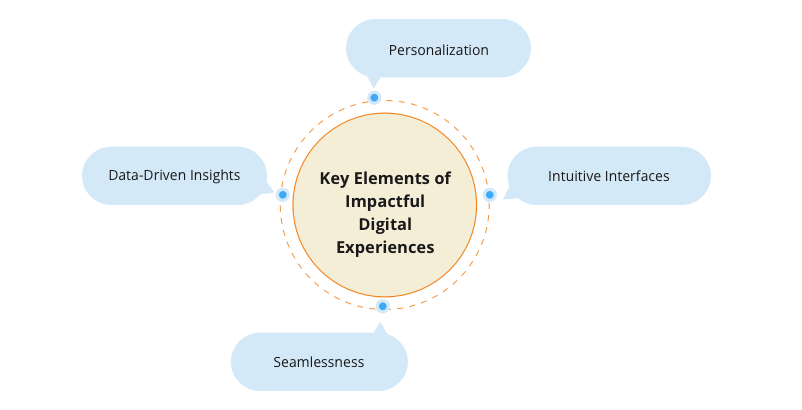
A. Personalization: Tailoring Experiences to Individual Needs and Preferences
Gone are the days of one-size-fits-all experiences. Today, personalization reigns supreme. Businesses excelling in personalization activities generate 40% more revenue from these efforts compared to the average competitor, according to McKinsey. Personalization constitutes the customization of digital experiences grounded in user data, behavior, and preferences. By offering personalized recommendations, content, and promotions, businesses craft more captivating experiences for their audiences.
Benefits:
- Enhanced relevance and engagement: Content and recommendations resonate more deeply, fostering user interest and interaction.
- Boosts conversion rates: Tailored offerings cater to specific needs, increasing the likelihood of purchase or desired action.
- Strengthens customer loyalty: Personalized experiences demonstrate understanding and value, fostering emotional connections with the brand.
B. Intuitive Interfaces: Simplifying the User Journey
Intuitive interfaces play a pivotal role in enhancing user experiences by ensuring clarity, efficiency, and ease of navigation across digital platforms. By anticipating user needs and providing intuitive guidance, you can empower users to navigate through complex processes with confidence and ease.
- Heightened User Engagement: Intuitive interfaces actively engage users and maintain their focus on achieving their objectives throughout their digital interactions.
- Enhanced Conversion Rates: Transparent navigation systems and recognizable design patterns streamline the user journey, facilitating the completion of desired actions such as making purchases or submitting forms.
- Elevated Brand Image: A meticulously crafted and intuitive interface not only conveys professionalism but also reflects the brand's commitment to user satisfaction, contributing to a positive perception of the brand among users and stakeholders alike.
C. Seamlessness: Creating Frictionless Interactions Across Channels and Devices
Seamlessness is all about ensuring fluid transition between various channels and devices throughout the customer journey. A successful digital experience is a part of a broader customer journey that encompasses various touchpoints. With which, customers anticipate consistent experiences whether interacting with a brand through a website, mobile app, social media platform, or in-person. Seamlessness ensures a smooth and consistent experience, where interactions across all channels, devices, and interfaces feel intuitive and effortless.
- Reduced frustration and confusion: Consistent experiences across all touchpoints minimize learning curves and prevent user confusion.
- Elevated brand perception: Consistency fosters trust and a sense of familiarity, strengthening brand image.
- Maximized efficiency: Seamless transitions allow users to complete tasks or engage with content effortlessly.
D. Data-Driven Insights: Leveraging Data to Understand and Anticipate Customer Behavior
Data is only valuable when transformed into actionable insights. According to the Harvard Business Review, companies utilizing data for decision-making are 5% more likely to surpass their peers in terms of profitability. By leveraging data-driven insights, businesses can understand user behavior, anticipate needs, and continuously refine digital experiences. This involves using analytics tools to identify patterns, analyze trends, and measure the effectiveness of implemented strategies.
- Proactive Personalization: By anticipating user needs and tailoring experiences in real-time, organizations can enhance engagement and satisfaction levels, fostering stronger connections with their audience.
- Continuous Improvement: Leveraging data-driven insights enables organizations to continuously evolve digital experiences based on user feedback and behavioral patterns, ensuring that their offerings remain relevant and responsive to changing preferences and expectations
- Informed Decision-Making: Data insights drive strategic decisions concerning product development, marketing campaigns, and resource allocation, empowering organizations to make informed choices.
Fueling Digital Impact: Customer-Centric Strategies That Work
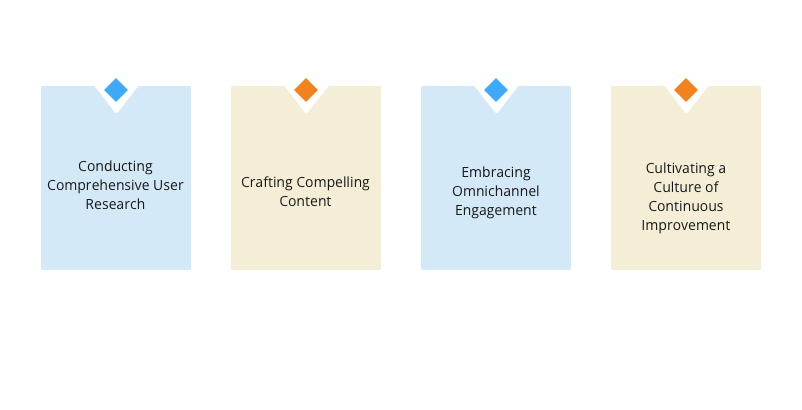
A. Conducting Comprehensive User Research: Unveiling Your Audience to Forge Impactful Experiences
Comprehensive user research plays a pivotal role in any successful customer-centric digital initiative. It involves delving deep into the essence of your target audience—comprehending their desires, expectations, and pain points. Armed with these pivotal insights, you pave the way for crafting digital experiences that deeply resonate and propel significant impact.
Below are some quintessential methods for executing effective user research:
Quantitative Research:
- Surveys: Utilize online surveys for wide audience reach and critical data on demographics, preferences, and behaviors.
- Website and app analytics: Dive into website traffic metrics, user behavior, and app usage to decode user journeys and identify areas for improvement.
Qualitative Research:
- User interviews: Engage in one-on-one conversations with users to glean qualitative insights into motivations, challenges, and pain points.
- Focus groups: Gather users for insightful discussions on digital experiences, extracting invaluable collective perspectives.
- User testing: Observe users interacting with digital offerings to uncover usability concerns and gather feedback on design and functionality.
B. Crafting Compelling Content: Captivating Your Audience with Engaging Narratives
Crafting compelling content is crucial for driving successful customer engagement in today's digital realm. It transcends mere information delivery, aiming to educate, entertain, and inspire while positioning your brand as an expert in your industry. Here's a concise roadmap for this:
Audience Understanding:
- Gain deep insights into your target audience's demographics, interests, and pain points.
- Utilize tools like surveys, analytics, and social listening to understand audience preferences.
Clear Objectives:
- Define clear and measurable goals for your content strategy, such as increasing brand awareness, driving website traffic, or boosting conversions.
- Align content objectives with overall business objectives to ensure coherence and effectiveness.
Content Variety:
- Explore diverse content formats including articles, videos, infographics, podcasts, webinars, and interactive content.
- Tailor content formats to suit different stages of the customer journey and address varying learning styles.
Value-Centric Approach:
- Craft content that provides genuine value to your audience, whether it's solving problems, offering insights, or entertaining.
- Address audience pain points and challenges directly, positioning your brand as a helpful resource.
Performance Monitoring:
- Implement robust analytics tools to track key performance indicators (KPIs) such as website traffic, engagement metrics, and conversion rates.
- Regularly analyze content performance data to identify trends, understand audience behavior, and refine content strategies accordingly.
C. Embracing Omnichannel Engagement: Providing Seamless Experiences Across Every Touchpoint
With customers interacting with brands across various channels, ensuring omnichannel engagement is crucial for the coordination of these touchpoints so as to provide consistent, cohesive, and personalized experiences throughout the customer journey.
“PwC reports that 73% of customers anticipate consistent experiences across all channels, including online, mobile, and in-store interactions.”
The key strategies for omnichannel success are:
- Unified Brand Identity: Maintain consistent brand voice, visual design, and messaging across all channels.
- Responsive and Optimized Experiences: Ensure websites, apps, and digital assets are responsive and optimized for various devices.
- Customer Journey Mapping: Analyze and map the customer journey across touchpoints to identify gaps and prioritize improvements.
- Data Integration and Analytics: Integrate data from different channels to gain insights into customer behavior and optimize campaigns.
- Omnichannel Marketing: Deliver consistent messaging and promotions across all relevant channels.
By effectively implementing these strategies, you can create a comprehensive and sustainable approach to your digital impact, ensuring your initiatives resonate with users, deliver value, and ultimately achieve your desired outcomes.
D. Cultivating a Culture of Continuous Improvement: Fostering innovation and experimentation to drive digital impact
A culture of continuous improvement is essential for sustained success. This involves fostering innovation, experimentation, and a willingness to learn and adapt to ensure your digital initiatives remain relevant, impactful, and user-centric. It encourages teams to think outside the box, experiment with new ideas, and explore emerging technologies. This leads to the development of innovative solutions that enhance user experiences, address evolving needs, and potentially lead to a competitive edge.
Key Practices for Nurturing a Culture of Continuous Improvement:
- Embrace Experimentation and Learning: Encourage calculated risks and experimenting with novel ideas, fostering a culture where both successes and failures are seen as opportunities for learning and growth.
- Elevate User Feedback: Actively solicit and integrate user feedback, leveraging both positive and negative insights to pinpoint areas for enhancement and elevate overall user experiences.
- Cultivate Collaborative Knowledge Sharing: Foster an environment of open communication and cross-team collaboration to dismantle silos and harness diverse perspectives, driving innovation and problem-solving.
- Utilize the Power of Data and Analytics: Regularly analyze key performance indicators (KPIs) to gain actionable insights into what works well, what doesn't, and where improvement efforts should be concentrated, empowering informed decision-making and continuous advancement.
Conclusion
The imperative of customer-centric digital initiatives in this ever-changing digital realm is undeniable. From tailoring experiences to seamless interactions, businesses must acknowledge the pivotal role of prioritizing delightful digital experiences across all touchpoints.
By anchoring your strategies around the customer, your organizations not only foster lasting relationships but also nurture brand loyalty and drive significant impact in a fiercely competitive market.
As we look toward the future, the horizon of customer-centric digital innovation brims with promise and opportunity. Emerging technologies like artificial intelligence, augmented reality and virtual reality offer exciting pathways for businesses to explore. These trends herald new possibilities for enhancing customer experiences, enabling organizations to stay at the forefront of innovation and adaptability. By embracing these transformative trends and maintaining agility in your approach, you can confidently navigate the digital world, propelling yourselves towards sustained success and relevance in an era defined by constant evolution and advancement.
---Interests---
You may also be interested in

Thought Leadership
Are Predictive Models Still Relevant in the Age of Campaigns, Journeys, and Nudges?

POV
Tracking Metrics in Adobe Analytics: A Strategic Guide

Thought Leadership
A Step-by-Step Guide to Audit your Martech Stack