Interactions Correctly?


CDP vs CRM: Understanding the Key Differences & Which one to choose?


Guide to Activate Customer Data With CDP
Customer data has become the backbone of business strategy, driving personalized experiences, stronger relationships, and better decision-making. Every interaction, whether it's a purchase, a query, or a social media mention, generates valuable insights. But without the right tools, this data often goes unused, leaving businesses with missed opportunities.
This is where Customer Relationship Management (CRM) platform and Customer Data Platforms (CDP) come into play. While both tools help manage and utilize customer data, they serve very different purposes. A CRM focuses on tracking and improving customer interactions, such as emails, calls, and transactions. A CDP, on the other hand, unifies data from all touchpoints to provide a 360-degree customer view, enabling real-time personalization and strategic insights.
Understanding the key differences between CRM and CDP, their use cases, and how they manage data can help businesses decide which platform aligns with their goals, or whether integrating both is the optimal solution.
Why Data Management Matters More Than Ever
Research shows that companies utilizing customer data effectively are 23 times more likely to acquire customers. Every interaction, whether it's a click on your website or a mention on social media, is a chance to understand your audience better.
Yet, 58% of businesses struggle to unify their customer data across platforms. This is where CRM and CDP systems can make or break your strategy. A CRM ensures no conversation or inquiry is lost, while a CDP transforms scattered data into actionable insights. Together, they help businesses move from reactive to proactive customer management.
Understanding CRM and CDP: Definitions and Examples
What is a CRM (Customer Relationship Management)?
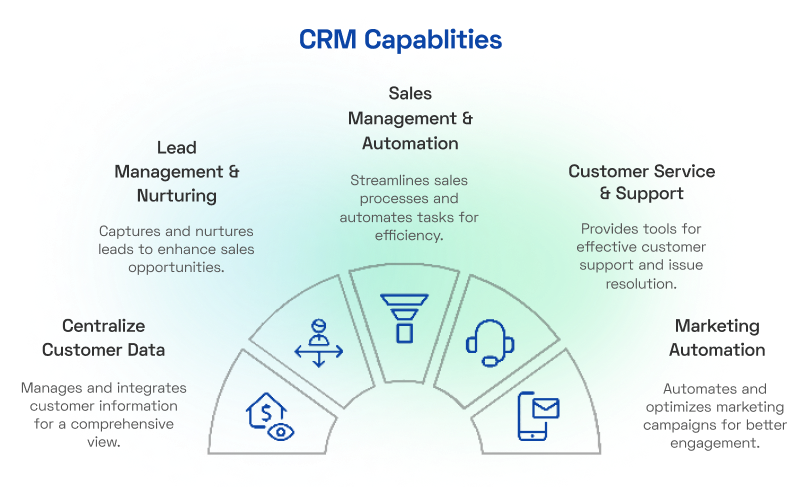
A Customer Relationship Management (CRM) system helps businesses track and manage customer interactions such as emails, calls, and purchases. It focuses on streamlining communication, improving relationships, and enhancing operational efficiency.
Examples:
- Lead Management and NurturingCRMs track leads from multiple sources (e.g., website, social media), assign lead scores, and automate follow-ups with emails or calls. High-value leads are prioritized for personalized outreach, boosting conversions and reducing manual effort.
- Customer Support and Ticket ManagementCRMs log customer issues as tickets, assign them to agents, and automate responses to FAQs. They also maintain a self-service knowledge base, ensuring faster resolutions and enhancing customer satisfaction.
What is a CDP (Customer Data Platform)?
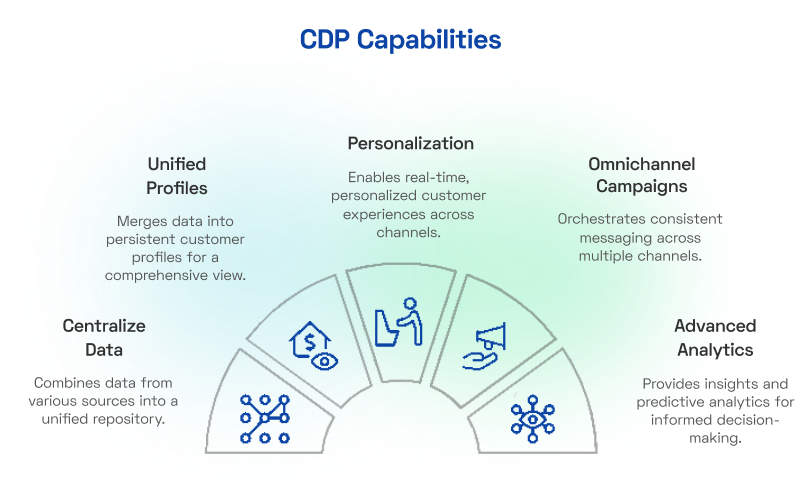
A Customer Data Platform (CDP) aggregates data from multiple sources, creating a 360-degree real-time view of each customer. It focuses on unifying, enriching, and utilizing data for actionable insights and personalized experiences.
Examples:
- Automated Lead NurturingMarketing automation platforms segment leads based on behavior, such as downloading an ebook or attending a webinar, and send personalized follow-up emails.
- Personalized Customer Retention CampaignsAutomation tools identify disengaged customers and send them targeted re-engagement campaigns, such as personalized discounts or reminders of loyalty program benefits.
Key Differences Between CRM & CDP
"Every business interaction generates invaluable customer data, but without the right tools, it often goes unused. CRM and CDP systems ensure this data drives better decision-making and stronger relationships."
Unlock the MarTech Modernization Strategy Guide Now
CRMs and CDPs may seem similar at first glance, but their core functionalities set them apart.
| Feature | CRM | CDP |
|---|---|---|
| Purpose | Manages customer interactions, tracks sales pipelines, and improves operational efficiency. | Unifies customer data from multiple sources for actionable insights and real-time marketing personalisation. |
| Primary Users | Sales, marketing, and customer support teams focused on improving relationships and service. | Marketing, analytics, and product teams focused on data-driven strategies and customer segmentation. |
| Data Focus | Handles structured data (e.g., contact details, purchase history, interaction logs). | Collects both structured and unstructured data (e.g., web behaviour, app activity, social media). |
| Real-Time Capabilities | Limited; relies on historical data and scheduled updates. | Built for real-time data processing, enabling immediate responses and dynamic marketing campaigns. |
| Customer View | Offers a fragmented view of customer interactions within specific functions (e.g., sales, service). | Provides a unified 360-degree customer profile by integrating data across all touchpoints and channels. |
| Integration | Integrates with sales tools, email marketing platforms, and customer service systems. | Connects with diverse platforms, including CRMs, ad platforms, and analytics tools, to enrich and unify customer data. |
| Pricing | Affordable, starting at £15–£50 per user per month for basic plans. | Expensive, starting at £20,000–£50,000 per year depending on features and scale. |
| Use Case | Best for managing leads, sales pipelines, and improving customer relationships. | Ideal for creating unified customer profiles, enabling personalisation, and driving data-driven decisions across channels. |
CRM vs CDP: A Breakdown
Key Difference 1: Purpose
CRM: Managing Customer Interactions and Operational Efficiency
A Customer Relationship Management (CRM) system focuses on managing customer relationships, tracking sales pipelines, and streamlining operational processes. By centralizing customer interactions—such as emails, calls, and service requests—it ensures sales, support, and marketing teams have access to relevant information to enhance customer experience.
CDP: Unified Customer Data for Actionable Strategies
A Customer Data Platform (CDP) is designed to unify and centralize customer data from diverse sources, such as websites, mobile apps, social media, and transactional systems, into a single, comprehensive customer profile. This enables businesses to deliver real-time marketing personalization and drive data-driven decisions.
If your goal is managing relationships and improving operational efficiency, choose a CRM. For unified customer profiles and real-time data insights, a CDP is essential. Many businesses benefit from integrating both systems to enhance their strategies.
Key Difference 2: Primary Users
CRM: Sales, Marketing, and Customer Support Teams
CRMs are used by sales teams, marketing teams, and customer support teams to improve customer interactions, manage leads, and track sales progress. For instance, sales teams leverage CRM features to streamline their pipeline, while support teams use it to enhance issue resolution.
CDP: Marketing, Analytics, and Product Teams
CDPs empower marketing teams and analytics teams by providing in-depth customer insights. They are ideal for creating customer segmentation and enabling personalized campaigns, while product teams use CDP insights to optimize customer experiences.
Takeaway: CRMs serve operational teams that interact directly with customers, whereas CDPs support strategic teams focused on driving data-driven personalization.

Key Difference 3: Data Focus
CRM: Structured Data for Operational Insights
CRMs primarily manage structured data, such as customer contact information, purchase history, and service logs. This data helps teams track and manage customer engagement efficiently.
CDP: Unified Structured and Unstructured Data
CDPs collect both structured data and unstructured data, such as web behavior, app activity, and social media engagement. This unified data enables a more comprehensive understanding of customer behavior.
Takeaway: CRMs are best for organizing operational data, while CDPs excel at integrating diverse data types for deeper customer behavior insights.
Key Difference 4: Real-Time Capabilities
CRM: Limited Real-Time Functionality
CRMs are typically designed to process historical data with periodic updates, making them suitable for tracking sales pipelines and customer support activities but less effective for real-time customer engagement.
CDP: Built for Real-Time Data Processing
CDPs are optimized for real-time data collection and activation, enabling businesses to respond instantly to customer actions with dynamic marketing campaigns or personalized website content.
Takeaway: If real-time marketing and immediate customer engagement are priorities, a CDP is indispensable. For managing ongoing customer relationships, a CRM is sufficient.
Key Difference 5: Customer View
CRM: Fragmented Customer Interactions
CRMs provide a segmented view of customer interactions based on specific functions, such as sales or support. While useful, this data is often siloed, making it harder to get a comprehensive understanding of customer behavior.
CDP: Unified 360-Degree Customer Profiles
CDPs consolidate data across all touchpoints and channels, creating a unified profile that includes purchase history, web activity, app usage, and more. This holistic view enhances personalized marketing campaigns and supports journey personalization.
Takeaway: For a complete picture of your customers, a CDP is the better choice. CRMs, however, remain crucial for managing interactions within individual functions.
Key Difference 6: Integration
CRM: Sales and Support Tool Integration
CRMs integrate seamlessly with tools like email marketing platforms, helpdesk software, and sales management systems. These integrations are geared toward improving operational workflows.
CDP: Broad Data Integration for Unified Insights
CDPs connect with a wide range of platforms, including CRMs, analytics tools, ad platforms, and customer service systems, to centralize and enrich customer data for more effective customer journey mapping.
Takeaway: CRMs excel in operational tool integration, while CDPs are better suited for creating unified data ecosystems that support advanced analytics and real-time customer engagement.
Key Difference 7: Pricing
CRM: Affordable and Scalable
CRMs are generally more affordable, with basic plans starting around £15–£50 per user per month. These systems are scalable, making them accessible to businesses of all sizes.
CDP: Higher Investment for Advanced Capabilities
CDPs require a larger financial commitment, with costs starting at £20,000–£50,000 per year. However, their ability to deliver actionable insights and personalized campaigns often justifies the investment for larger organizations.
Takeaway: For smaller budgets, CRMs are a practical starting point. CDPs are ideal for organizations that require advanced data capabilities and have the resources to invest.
Key Difference 8: Use Case
CRM: Enhancing Customer Relationships
CRMs focus on managing customer interactions and improving operational efficiency. They centralize communication and automate workflows to help teams deliver seamless service.
- Sales Tracking: Monitors pipelines and optimizes strategies to address bottlenecks.
- Customer Support: Resolve issues faster by centralizing service requests and customer histories.
- Cross-Team Collaboration: Share customer insights between sales, marketing, and support for consistent messaging.
- Automation: Reduce manual tasks like sending reminders and updating records for greater productivity.
CDP: Driving Personalized Marketing and Insights
CDPs unify customer data across channels to deliver real-time personalization and actionable insights. They focus on enriching customer profiles and driving marketing strategies.
- Unified Customer Profiles: Combine data from apps, websites, and social media for a 360-degree view.
- Real-Time Personalization: Trigger campaigns based on live behavior like browsing or purchases.
- Advanced Segmentation: Group customers into actionable segments (e.g., "at-risk churners").
- Omnichannel Engagement: Enable consistent communication across all platforms.
Takeaway: CRMs are crucial for relationship management, while CDPs enable advanced personalization and customer segmentation. Integrating both provides a comprehensive approach to customer engagement.
Conclusion
The choice between a Customer Data Platform (CDP) and a Customer Relationship Management (CRM) system depends on your organization's specific needs and how you manage and interact with customer data. Many organizations use both systems in tandem. A CRM focuses on managing customer interactions, sales opportunities, and customer service, which is essential for sales and support teams. In contrast, a CDP provides the data layer that enables advanced customer insights, segmentation, and personalization, which primarily supports marketing teams. By integrating both tools, you can ensure your organization has a comprehensive view of customer data, driving better alignment and improved sales and marketing outcomes.
Ram Prabhakar
Head of Solutions and Content
Xtelligence Inbox.
Your weekly dose of marketing smarts!