

Are Predictive Models Still Relevant in the Age of Campaigns, Journeys, and Nudges?
Authored by Vignesh Gunaseelan
Published: March 13, 2025 | Updated: March 13, 2025
Are Predictive Models a Thing of the Past?
Marketing today moves at lightning speed.
Real-time campaigns. Personalized experiences. Behavior-driven nudges.
It’s easy to think predictive models are old news.
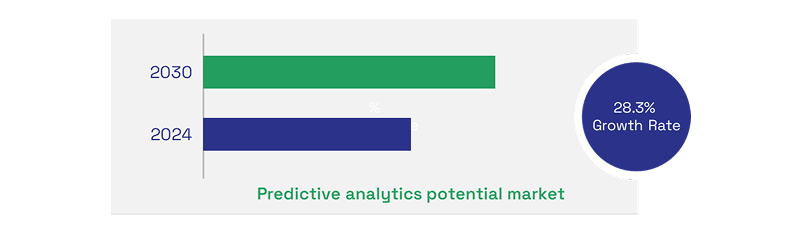
source: grandviewresearch
But they’re not. Predictive models play a key role.
They spot trends. Help make smarter decisions. And lay the groundwork for solid strategy.
The question isn’t if they’re relevant.
It’s how they can evolve. How can they complement today’s tactics?
Predictive modeling doesn’t just look at the here and now, they help you anticipate challenges and uncover opportunities that might otherwise fly under the radar.
No more guessing, no more reacting - just informed decisions based on data.
For businesses, this isn’t just a nice-to-have. It’s essential.
It’s the difference between staying ahead of the curve and falling behind.
It like turning a gamble into a guaranteed hit.
They can plan for the future, identify risks, and seize new opportunities.
By using statistical techniques and machine learning, predictive modeling dives into data, spots patterns, and forecasts what’s coming next.
Pretty cool, right?
And here’s where it gets even more interesting:

source: Gartner
That means predictive modeling is going to be at the heart of their strategies.
It’s no longer a ‘nice-to-have,’ it’s a ‘must-have.’
Ok. But what fuels predictive modeling?
Obviously Data! But what kind of data.
There is a trend in businesses to overlook historical data and focus on the recent data.
But it’s like treating the symptom and not the root cause!
The Risk of Getting Stuck in the Now: Why Recent Data Isn’t Enough
Let’s talk about why relying solely on recent data can really fall short.
Sure, it’s great for understanding what’s happening right now - tracking the current trends and seeing what's going on in the moment.
But here’s the thing: focusing only on recent data can actually lead you astray.
Recent data often includes short-term fluctuations - spikes or dips that might just be temporary.
These trends don’t always reflect long-term patterns, and if you're not looking at the bigger picture, you’re limiting your decision-making.

Source:Gartner
That’s where historical data comes in.
It provides the missing context, helping predictive models spot recurring patterns and filter out the noise.
With historical data, models can separate anomalies from real, meaningful trends.
Without this broader view, organizations risk making decisions that are reactive rather than proactive.
Historical data helps ensure you're making decisions grounded in a more complete understanding of both past and present conditions.
It’s about creating a fuller, more reliable foundation for decision-making.
How Historical Data Enriches Predictive Insights
Historical data is the foundation of reliable predictive modeling.
It captures long-term trends, patterns, and cycles that improve the accuracy of predictions.
This data provides context that recent data alone cannot offer.
It allows businesses to move beyond short-term snapshots and gain a deeper understanding of long-term behaviours and changes.

Source: Harvard Business Review
This reduces the chances of reactive decision-making. Instead, companies can act with greater confidence.
Retailers benefit from historical data by identifying seasonal buying trends.
They use this insight to optimize inventory and fine-tune marketing strategies.
In the finance sector, long-term market data is key.
It helps organizations predict asset performance and manage risks effectively.
Historical data also makes predictive models stronger.
Algorithms trained on large, diverse datasets perform better. They can separate typical fluctuations from true anomalies.
Historical data adds depth and breadth to predictive models.
It ensures that businesses are not just reacting to immediate trends. Instead, they gain a strategic perspective that helps them plan for the future.
Types and Techniques of Predictive Modeling for Deeper Insights
Predictive modeling is a versatile tool.
It includes different types and techniques to match specific goals and datasets.
From basic statistical methods to advanced machine learning, each approach brings unique benefits.
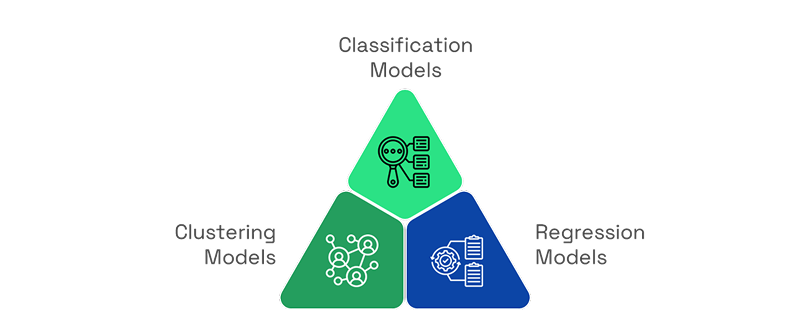
These techniques help uncover patterns and provide actionable insights.
Classification Models
Classification models predict categorical outcomes.
They work best when the goal is to group data into defined categories.
For example, a bank can use a classification model to detect fraudulent transactions. Similarly, e-commerce companies rely on these models for customer segmentation.
Regression Models
Regression models are used for continuous outcomes.
These models help understand relationships between variables.
For example, companies use regression models to forecast revenue or predict energy consumption. This makes them ideal for estimating values over time.
Clustering Models
Clustering models group data based on similarities.
Unlike classification, these models do not rely on predefined categories.
These models are effective for discovering hidden patterns. For instance, marketers use clustering to segment customers by behaviour.

The choice of model depends on your goals and data.
Use classification for grouping categories. Opt for regression to predict continuous values. Select clustering for uncovering hidden relationships.
Each type of model adds value when applied correctly.
With the right approach, predictive modeling can unlock powerful insights and drive better decisions.
Combining Historical and Real-Time Data for More Accurate Models
Integrating historical and real-time data is a game-changer for predictive modeling.
This approach combines the depth of historical data with the immediacy of real-time information.
Leveraging Historical Data for Context
Historical data provides the foundation for predictive insights.
It captures trends, patterns, and relationships that develop over time.
Predictive models trained on historical data can identify recurring patterns. They also account for seasonality and long-term trends that short-term data cannot provide.
The Role of Real-Time Data
Real-time data ensures models remain agile and responsive.
It reflects current market conditions, such as sudden shifts in demand or unexpected disruptions.
Real-time data captures what is happening now.
It complements historical data by providing updates on sudden changes in consumer sentiment or market trends.
The Synergy of Combining Both
Combining historical and real-time data balances stability with adaptability.
Historical data grounds the model in proven trends. Real-time data fine-tunes predictions to reflect immediate changes.

Source: Data Analytics Trends 2025
Tools and Techniques for Integration
Integrating both types of data requires advanced tools and methods. Stream processing tools like Apache Kafka enable real-time data ingestion.
Machine learning frameworks like TensorFlow and PyTorch help analyze and combine datasets.
Cloud-based platforms simplify the process further. They provide scalable pipelines for managing large volumes of data.
Why This Matters
Using both historical and real-time data creates predictive models that are both accurate and adaptive.
This combination helps businesses stay competitive in fast-changing environments.
By leveraging the strengths of both data types, organizations can plan for the future while responding effectively to the present.
This integrated approach is critical in today’s dynamic landscape.
Leveraging Predictive Modeling for Business Wins
Predictive modeling is transforming how businesses operate. By analyzing data and applying advanced algorithms, companies can anticipate trends, optimize operations, and deliver exceptional customer experiences.
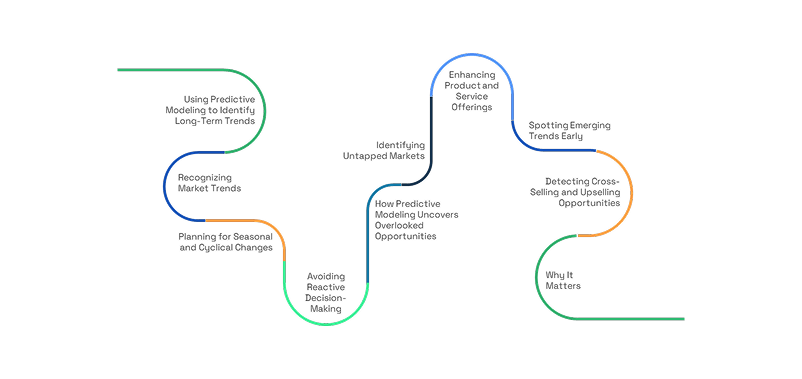
Here’s how predictive modeling drives success across industries.
Using Predictive Modeling to Identify Long-Term Trends
Predictive modeling helps businesses uncover long-term trends. It provides insights into market shifts, customer behaviour, and operational needs. These insights are critical for strategic planning and sustained growth.
Recognizing Market Trends
Predictive models are excellent at spotting emerging trends.
They analyze historical data to uncover changes before they become widespread..
In finance, predictive models analyze historical price data.
These insights help investors forecast asset performance and optimize portfolios.
Planning for Seasonal and Cyclical Changes
Seasonal and cyclical changes impact many industries.
Predictive modeling helps businesses prepare for these fluctuations.
Utility companies, for example, use predictive models to estimate energy demand during peak seasons. This ensures a stable supply and reduces the risk of outages.
Avoiding Reactive Decision-Making
Predictive modeling reduces reliance on reactive decisions.
It helps organizations anticipate challenges and opportunities in advance.
This proactive approach allows companies to implement measures that align with their long-term objectives.
With predictive insights, businesses can position themselves for sustained success.
How Predictive Modeling Uncovers Overlooked Opportunities
Predictive modeling goes beyond forecasting.
It excels at finding hidden opportunities that might otherwise be missed.
By analyzing large datasets and spotting subtle patterns, predictive models open the door to growth, efficiency, and innovation.
Here’s how businesses are uncovering opportunities with predictive analytics.
Identifying Untapped Markets
Predictive models analyze demographic, geographic, and behavioural data to pinpoint emerging markets.
They also highlight underserved customer segments that represent growth opportunities.
Source: Deloitte
Enhancing Product and Service Offerings
Predictive analytics helps refine products and services by analyzing customer feedback and usage data.
For example, software companies use predictive models to understand which features are most valuable to specific customer groups. This insight allows them to prioritize updates that address user needs, improving customer satisfaction and loyalty.
Spotting Emerging Trends Early
Emerging trends often start as subtle shifts in consumer behaviour or market dynamics. Predictive models can detect these changes before they become mainstream.
In the entertainment industry, for example, predictive analytics identifies trending genres by analyzing streaming habits. This allows companies to produce content tailored to future audience preferences.
Predictive modeling uncovers opportunities that might otherwise go unnoticed. It helps businesses:

By leveraging these insights, organizations can unlock new possibilities for growth and stay ahead in competitive industries.
Predictive modeling is not just about predicting the future - it’s about finding hidden opportunities to shape it.
The Future of Predictive Modeling: A Holistic Approach to Data
Predictive modeling is advancing rapidly.
With new technologies, growing data availability, and demand for better decision-making tools, the future looks promising.
This means integrating diverse data sources, using advanced techniques, and addressing ethical concerns.
This approach will help organizations unlock innovation and gain a competitive edge.
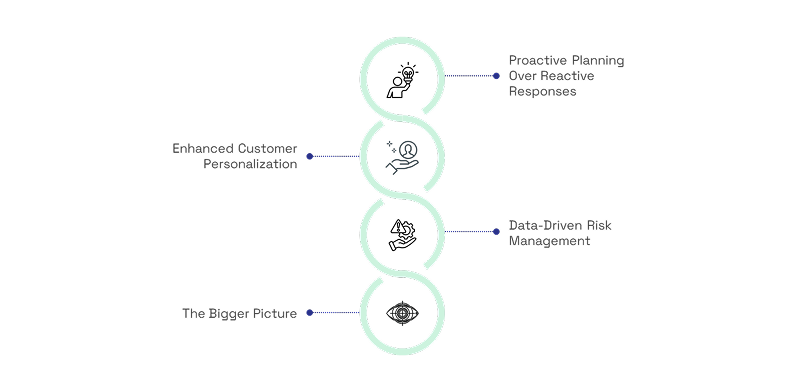
Proactive Planning Over Reactive Responses
Predictive modeling makes decision-making proactive.
Instead of reacting to problems, businesses can plan ahead.
This proactive approach reduces uncertainty. It helps organizations prepare for potential disruptions and stay ahead of challenges.
Enhanced Customer Personalization
Predictive modeling helps businesses understand their customers better.
By analyzing historical and real-time data, companies can tailor their offerings to individual needs.
E-commerce platforms are a great example. They recommend products based on browsing history, driving sales and boosting customer satisfaction.
This personalized approach strengthens customer relationships. It also increases loyalty and retention over time.
Data-Driven Risk Management
Managing risk is a priority for every organization.
Predictive analytics provides powerful tools for identifying and addressing risks early.
In finance, banks use predictive models to assess creditworthiness and detect fraud. They also forecast market fluctuations to manage investments effectively.
By quantifying risks, businesses can make more informed decisions.
This helps them balance potential gains with possible losses.
The Bigger Picture
Predictive modeling is reshaping how businesses operate.
It empowers organizations to act with confidence, speed, and insight.
From personalizing customer experiences to optimizing operations, predictive analytics is now central to strategic decision-making.
Companies that embrace this approach gain a significant advantage.
They can navigate challenges more effectively and thrive in a data-driven world.
Conclusion
Adobe Commerce PWA Studio is a powerful tool for building a smooth app-like experience on mobile devices using Progressive Web Apps (PWAs).
PWA Studio provides e-commerce business with fast, responsive, and engaging mobile sites that combine the best aspects of both web and native apps. The focus on speed and performance ensures a smooth, uninterrupted shopping journey, reducing bounce rates and increasing conversions.
The offline functionality in PWA Studio ensures consistent shopping experiences, even in areas with poor connectivity. This feature minimizes lost sales, and builds trust and reliability among users who can depend on the app regardless of network conditions.
Native app-like features, such as push notifications and home screen shortcuts, enhance user engagement, making it easier to maintain customer relationships and encourage repeat business.
The cost efficiency and faster development times associated with PWA Studio allow online retail merchants to innovate and adapt quickly, and respond to market demands without the overhead of maintaining multiple platform-specific apps.
The scalable and flexible architecture allows businesses to continuously evolve their mobile presence, integrating new technologies and features as they grow. PWA Studio equips enterprises to remain competitive in the ever-expanding mobile commerce market.
Global Office Locations


#901, 9th Floor , Ellora Fiesta.
Plot No - 8 , Sector - 11 , Sanpada.
Opp. Juinagar Rly Station.
Navi Mumbai – 400 705

Xerago Towers, Plot 80 & 93,
Industrial Estate, Perungudi,
Chennai, Tamil Nadu - 600096
Office No. 26, 10/F, Beverley Commercial Centre,
87-105 Chatham Road South, Tsim Sha Tsui, Kowloon,
Hong Kong