Interactions Correctly?


Big Data, Big Impact: Leveraging Analytics for Campaign Optimization
Authored by Ram Prabhakar
Published: February 22, 2024 | Updated: June 11, 2025
Introduction
The convergence of market data with internally generated datasets has become a transformative force, empowering organizations to glean profound insights and drive strategic decision-making and campaign optimization. This integration represents a paradigm shift in how companies harness information, allowing them to merge their proprietary data with expansive market datasets. By seamlessly blending internal metrics, such as customer behaviors, transaction histories, and operational metrics, with external market intelligence encompassing trends, competitor activities, and economic indicators, businesses can cultivate a comprehensive understanding of their operating landscape.
This synergy of data not only facilitates a nuanced comprehension of customer needs and preferences but also enables organizations to navigate dynamic market conditions with agility. In this interconnected data ecosystem, Big Data is the linchpin, propelling enterprises towards a future where decisions are rooted in a holistic view of both internal dynamics and the broader market panorama.
How Big Data helps Businesses Optimize Campaigns
Big Data plays a pivotal role in helping businesses optimize their campaigns across various domains, leveraging its capacity to process and analyze massive datasets.
- By combining internal customer data with external market data, businesses can gain a more comprehensive understanding of their customers. This includes their preferences, behaviors, and patterns.
- Integrated data helps in fine-tuning marketing strategies. Businesses can tailor advertising campaigns based on a more nuanced understanding of their target audience and market trends.
- By analyzing large datasets, patterns and behaviors can be identified, enabling targeted campaigns tailored to specific customer segments.
- Through analysis of customer data, businesses can personalize marketing messages and offerings based on individual preferences, behaviors, and purchase history. This level of personalization enhances engagement and increases the likelihood of conversion.
- Big Data analytics enable businesses to predict future trends and customer behaviors. This information can be used to anticipate market shifts, optimize inventory, and tailor campaigns based on predicted consumer preferences.
- Big Data tools can monitor and analyze social media platforms to gauge public sentiment about a brand or campaign. This feedback can be invaluable for adjusting marketing messages and strategies in real-time.
In essence, Big Data provides the analytical power and insights necessary for businesses to move beyond traditional marketing approaches, fostering a more dynamic, data-driven, and adaptive campaign optimization process.
Spotting Correlations, Trends and Patterns
The integration of Big Data with company-specific datasets offers a powerful framework for extracting valuable insights, identifying correlations, and discerning trends and patterns. This integration process involves combining internal data generated by the company with external datasets, often on a large scale, to reveal meaningful relationships and opportunities.
The amalgamation of Big Data and company-specific data results in a comprehensive dataset encompassing both internal operational details and external environmental factors. This inclusive repository of information empowers businesses with the capability for a thorough and holistic analysis. Through the integration of diverse datasets, businesses can conduct correlation analyses, unveiling relationships between various variables. For instance, correlating customer purchase behavior with economic indicators or social trends can unearth valuable insights crucial for strategic decision-making.
The integration of expansive datasets establishes the groundwork for the development of predictive models. These models leverage historical data to forecast future trends and behaviors, equipping businesses with insights to proactively adjust strategies and operations for optimal outcomes.
The synthesis of transactional data, customer interactions, and external market data aids in identifying patterns in consumer behavior. This comprehensive understanding encompasses preferences, buying habits, and responses to marketing initiatives, enabling businesses to tailor their offerings more effectively to meet customer expectations.
Integrating market data with company-specific information empowers organizations to analyze broader market trends. This analytical approach includes scrutinizing industry developments, competitor activities, and shifts in consumer preferences, providing the foundation for informed strategic planning.
The amalgamated dataset streamlines the process of customer segmentation, allowing businesses to discern common characteristics and behaviors. This, in turn, enables precise tailoring of marketing strategies to specific customer segments, significantly enhancing the effectiveness of campaigns.
In essence, the integration of Big Data and company data is a strategic initiative that empowers businesses to move beyond traditional analytics, fostering a deep understanding of their operations within the broader context of the market. This approach is fundamental for making data-informed decisions and gaining a competitive edge in today's dynamic business landscape.
Big Data Sources for Campaign Analytics
When it comes to campaign analytics, leveraging diverse sources of Big Data is essential for obtaining comprehensive insights and optimizing marketing strategies. Apart from data from Web analytics tools, social media platforms, CRM systems, email marketing platforms, Ad platforms, ecommerce platforms, mobile apps, etc. here are specific sources of Big Data that can be tapped for campaign analytics:
- Businesses can tap into POS systems to gather data on sales transactions, popular products, and customer buying patterns, aiding in retail campaign optimization.
- Data from location-based services and geospatial platforms provide insights into customer movement patterns and help optimize location-based targeting for campaigns.
- Internet of Things (IoT) devices, such as smart home devices or wearable technology, generate real-time data that can offer insights into user behavior and preferences.
- Utilizing tools and platforms that provide insights into competitor activities, market trends, and industry benchmarks contributes to more informed campaign strategies.
- Weather patterns can significantly impact consumer behavior. Integrating weather data into campaign analytics is especially important for industries where weather influences purchasing decisions, such as retail and hospitality.
- Banking and financial transactions data can be valuable for understanding consumer spending patterns and tailoring campaigns accordingly.
- Data from voice-activated devices and call centers contribute to voice analytics, offering insights into customer interactions and preferences.
By tapping into these diverse sources of Big Data, businesses can gain a holistic view of their audience, refine their campaigns, and make data-driven decisions for more effective marketing strategies.
Potential Challenges in leveraging big data for campaign optimization
While leveraging Big Data for campaign optimization offers numerous benefits, businesses may face several challenges in the process. These challenges can stem from technical, organizational, and ethical considerations.
The quality and accuracy of the data play a critical role in deriving meaningful insights. Inaccurate or incomplete data can lead to flawed analyses and suboptimal campaign decisions.
Integrating diverse datasets from various sources can be complex. Inconsistent data formats, varying structures, and compatibility issues may arise, requiring sophisticated data integration solutions.
The three Vs of Big Data—volume, velocity, and variety—pose challenges. Dealing with massive volumes of data, handling rapid data streams, and managing diverse data types require advanced infrastructure and analytics capabilities.
Implementing the necessary infrastructure for storing, processing, and analyzing Big Data can be expensive. Businesses need to invest in scalable and reliable systems to handle large datasets effectively.
Achieving real-time analytics for instant campaign adjustments can be challenging. It requires high-speed data processing systems and may pose additional strain on infrastructure.
Extracting meaningful insights from complex datasets, especially in food data analytics, requires expertise. Interpreting correlations, patterns, and trends can be challenging, and any misinterpretation could lead to flawed decisions in campaigns or strategies.
Rapid advancements in technology may lead to the obsolescence of existing tools and platforms. Keeping up with the latest technologies and ensuring compatibility with legacy systems can be challenging.
Conclusion
The strategic integration of Big Data into campaigns presents businesses with a powerful toolkit for optimizing efforts, refining strategies, and achieving heightened success.
And when it comes to customer acquisition, leveraging the wealth of insights generated by Big Data analytics enhances every facet of the process, from understanding audience nuances to tailoring personalized content and optimizing channels.
The data-driven approach enables businesses to move beyond traditional methods, facilitating a more proactive, precise, and adaptive customer acquisition strategy.
One of the key advantages lies in customer segmentation, where businesses can dissect their audience into distinct cohorts based on behaviors, preferences, and demographics. This segmentation paves the way for targeted and personalized campaigns, ensuring that marketing efforts resonate more effectively with specific customer groups. Predictive analytics, driven by Big Data, takes customer acquisition to a proactive level by forecasting future behaviors and identifying high-potential leads. This foresight enables businesses to focus their resources on prospects more likely to convert, thereby improving the efficiency of acquisition campaigns.
Real-time analytics emerges as a game-changer, allowing businesses to monitor and adjust strategies on the fly. The agility gained through real-time insights ensures that campaigns remain responsive to shifting customer behaviors and market dynamics. The holistic approach of omni-channel marketing, facilitated by Big Data, guarantees a seamless and consistent customer experience across various touchpoints, reinforcing the chances of successful acquisition.
Moreover, businesses can fine-tune their customer acquisition journey by conducting in-depth analyses of conversion funnels and mapping the entire customer journey. This data-driven optimization enhances the efficiency of campaigns, ensuring a smoother and more engaging path from awareness to conversion.
Competitor analysis, A/B testing, dynamic pricing strategies, and social listening all become more potent when empowered by Big Data analytics. The ability to derive actionable insights from vast datasets allows businesses to stay ahead of industry trends, experiment with campaign elements, adjust pricing dynamically, and respond to real-time social feedback. By tapping into the wealth of information provided by Big Data, businesses gain a competitive edge in the customer acquisition landscape.
In essence, the adoption of Big Data is not merely a technological advancement but a transformative shift in how businesses approach customer acquisition. The iterative and adaptive nature of Big Data analytics enables continuous refinement, learning, and improvement in customer acquisition strategies. It fosters a culture of data-driven decision-making, where businesses are empowered to make informed choices based on empirical evidence rather than relying solely on intuition.
As businesses navigate the tricky business of customer acquisition, those harnessing the capabilities of Big Data are better positioned to understand their audience deeply, deliver more impactful campaigns, and ultimately drive higher conversion rates. The journey towards customer acquisition excellence is a dynamic one, and with Big Data as a guiding force, businesses can navigate this journey with precision, agility, and unparalleled effectiveness.
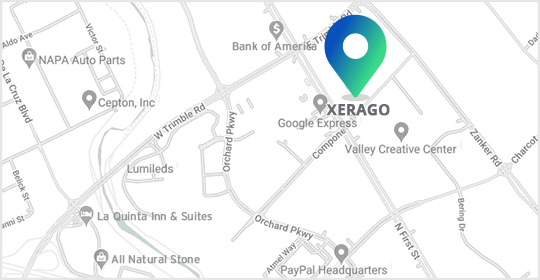
Global Office Locations
2570 N. First Street, Suite 200,
San Jose, CA 95131