


Deliver Enterprise-Grade Applications Faster
with AI-Augmented Engineering and Built-In
Scalability
The Challenge We Solve
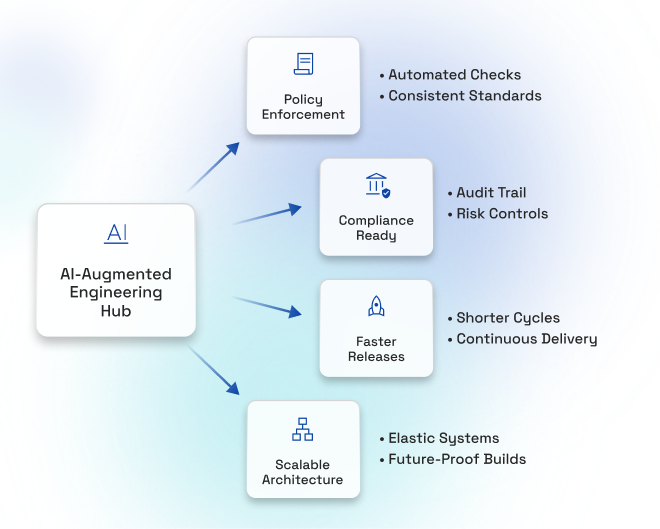
Enterprise application development often suffers from fragmented teams, slow handoffs, and legacy-driven complexity. Codebases become rigid, changes introduce risk, and user experience takes a backseat to delivery timelines. Supporting omnichannel experiences, maintaining security, and integrating with legacy systems only adds to the challenge. While AI is increasingly used in isolated tasks like code generation, it rarely drives architectural or operational transformation. Enterprises need a unified, AI-augmented engineering model that connects design, development, and deployment into a seamless, scalable system.
The Challenge We Solve
Enterprise application development often suffers from fragmented teams, slow handoffs, and legacy-driven complexity. Codebases become rigid, changes introduce risk, and user experience takes a backseat to delivery timelines. Supporting omnichannel experiences, maintaining security, and integrating with legacy systems only adds to the challenge. While AI is increasingly used in isolated tasks like code generation, it rarely drives architectural or operational transformation. Enterprises need a unified, AI-augmented engineering model that connects design, development, and deployment into a seamless, scalable system.
The Challenge We Solve
Enterprise application development often suffers from fragmented teams, slow handoffs, and legacy-driven complexity. Codebases become rigid, changes introduce risk, and user experience takes a backseat to delivery timelines. Supporting omnichannel experiences, maintaining security, and integrating with legacy systems only adds to the challenge. While AI is increasingly used in isolated tasks like code generation, it rarely drives architectural or operational transformation. Enterprises need a unified, AI-augmented engineering model that connects design, development, and deployment into a seamless, scalable system.
Our Strategic Approach
We engineer enterprise applications as scalable, modular systems that align with evolving business needs. Our approach combines proven SDLC practices with AI-infused workflows across design, development, testing, and deployment. At the center of this is our proprietary Code Formation Framework, which uses LLMs to generate boilerplate code, recommend architectural patterns, enforce coding standards, and accelerate test coverage, all under human oversight.
We deploy AI agents throughout the engineering lifecycle to manage environment setup, defect triage, and CI/CD integration. This significantly reduces manual effort and shortens iteration cycles. Whether it is a responsive web application, a native mobile experience, or a complex enterprise-grade platform, we ensure consistency, quality, and speed by treating engineering as a connected, continuous function.
What’s Included
Why Leading Brands Choose Us
---desktop---
- AI-Augmented Delivery Model
- Code Formation Framework
- Enterprise-Grade Engineering Discipline
- Accelerated Modernization with Minimal Risk
- Platform-Native Development Expertise
- Embedded Quality and Observability
- Continuous Optimization Post-Launch
- Flexible Engineering Models
AI-Augmented Delivery Model
We infuse AI across architecture, development, testing, and optimization workflows to compress build cycles, improve decision-making, and reduce manual effort across the engineering lifecycle.
Learn More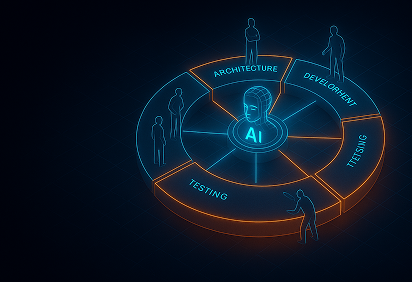
AI-Augmented Delivery Model
We infuse AI across architecture, development, testing, and optimization workflows to compress build cycles, improve decision-making, and reduce manual effort across the engineering lifecycle.
Learn MoreCode Formation Framework
Our proprietary framework transforms structured business inputs into modular engineering assets, reducing onboarding effort and enabling consistent delivery across teams and sprints.
Learn More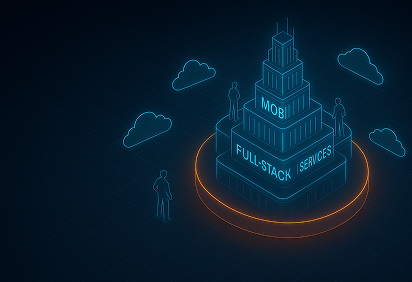
Enterprise-Grade Engineering Discipline
We bring rigorous practices across full-stack, microservices, and mobile development, backed by deep experience in high-availability systems and multi-region architectures.
Learn More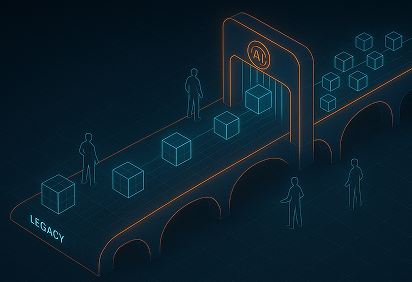
Accelerated Modernization with Minimal Risk
We minimize rewrite overheads by combining dependency mapping, logic reuse, and AI-assisted transformation blueprints to modernize legacy systems with precision.
Learn More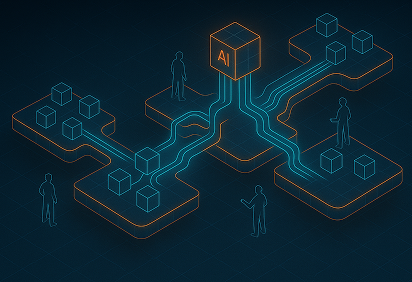
Platform-Native Development Expertise
We specialize in extending platforms like Adobe, Salesforce, HCL Unica, and Oracle with custom integrations, headless frontends, and scalable architecture layers.
Learn More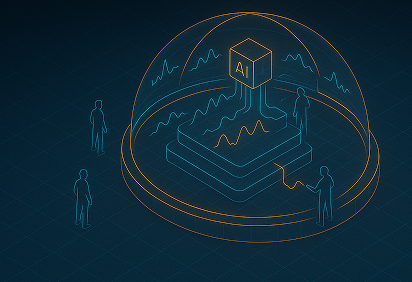
Embedded Quality and Observability
We integrate quality engineering and observability into every delivery stream, enabling early defect detection, real-time root cause analysis, and faster incident resolution.
Learn More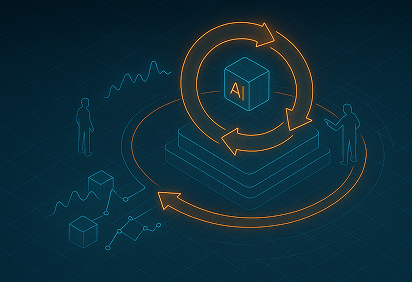
Continuous Optimization Post-Launch
Our support model includes embedded telemetry, AI-driven user journey mapping, and proactive enhancement pipelines to ensure applications evolve with business needs.
Learn More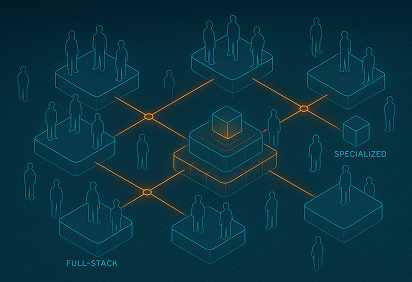
Flexible Engineering Models
We offer pod-based, full-stack, and specialized engineering team configurations that scale with product scope and maturity, reducing management overhead for enterprise teams.
Learn More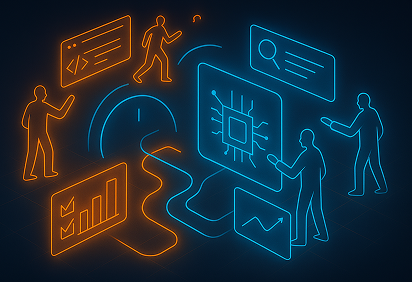
Accelerators That Set Us Apart
Accelerator
Code Formation Framework
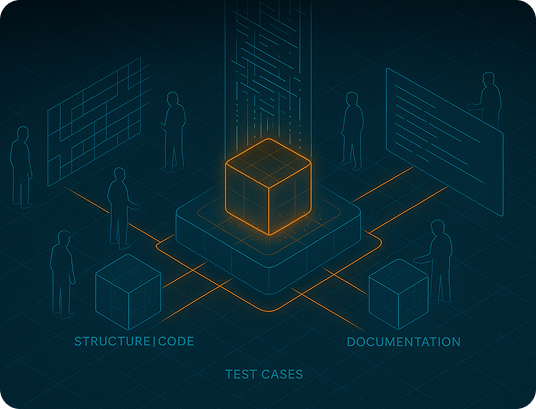
A proprietary accelerator that transforms structured business requirements into ready-to-extend code scaffolds, test cases, and documentation using AI-assisted parsing and validation. Reduces time-to-code by up to 40%, ensures architecture consistency across squads, and bridges gaps between product managers and engineering teams.
Accelerator
AutoRefactor Intelligence
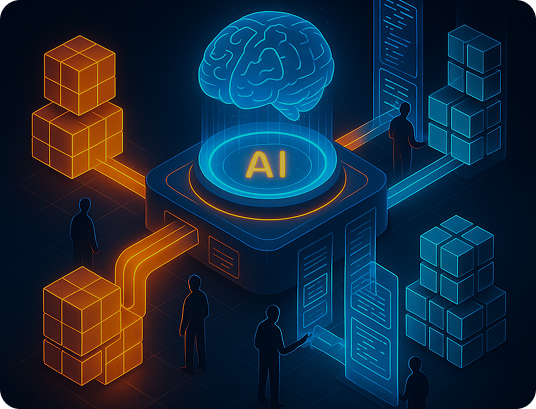
An AI-powered utility that scans legacy codebases to identify dead code, architecture bottlenecks, and modernization candidates. It also suggests migration paths for monolith-to-microservices transitions. De-risks modernization efforts, lowers maintenance costs, and accelerates cloud-readiness by eliminating manual refactoring guesswork.

Accelerator
UX Flow Simulator
A behavior simulation tool that uses synthetic personas and telemetry-backed intent modeling to test application flows pre-launch across devices, screen sizes, and usage conditions. Identifies friction points before go-live, reduces redesign costs, and boosts conversion and retention by ensuring flow integrity from day one.
Accelerator
Test Coverage Optimizer
An AI-backed engine that maps functional coverage gaps using commit history, test logs, and usage telemetry. It auto-generates test scenarios and recommends prioritization across regression suites. Improves test efficiency, reduces defect leakage into production, and ensures QA efforts align with real-world usage impact.
Client Wins
Outcomes You Can Expect
Accelerate time-to-market by up to 40%AI-augmented scaffolding, automation of repetitive tasks, and streamlined collaboration reduce development effort across frontend, backend, and testing layers.
Lower total cost of engineering by 25–35%Engineering efficiency, code reuse, and intelligent test optimization reduce resource requirements and minimize rework and maintenance overheads.
Improve release reliability and deployment success ratesIntegrated quality engineering, observability, and continuous validation ensure fewer defects, faster rollback, and higher confidence during production rollouts.
Modernize legacy systems without disrupting operationsTargeted modernization and guided code transformation reduce rewrite effort while preserving critical business logic and minimizing risk.
Enhance collaboration across product and engineering teamsCode Formation and AI-generated documentation improve alignment, reduce translation errors, and help teams move from ideation to execution with clarity.
Continuously optimize applications post-launchAI-led monitoring, usage analysis, and feature performance feedback enable intelligent enhancements that improve adoption and user satisfaction over time.
Accelerate time-to-market by up to 40%AI-augmented scaffolding, automation of repetitive tasks, and streamlined collaboration reduce development effort across frontend, backend, and testing layers.
Lower total cost of engineering by 25–35%Engineering efficiency, code reuse, and intelligent test optimization reduce resource requirements and minimize rework and maintenance overheads.
Improve release reliability and deployment success ratesIntegrated quality engineering, observability, and continuous validation ensure fewer defects, faster rollback, and higher confidence during production rollouts.
Modernize legacy systems without disrupting operationsTargeted modernization and guided code transformation reduce rewrite effort while preserving critical business logic and minimizing risk.
Enhance collaboration across product and engineering teamsCode Formation and AI-generated documentation improve alignment, reduce translation errors, and help teams move from ideation to execution with clarity.
Continuously optimize applications post-launchAI-led monitoring, usage analysis, and feature performance feedback enable intelligent enhancements that improve adoption and user satisfaction over time.
We Are Technology Agnostic


















Insights Beyond Consulting
Get access to our Guides, Resources, Tools and Frameworks
Ready to See the Difference
Country*